Let’s be real. The ramen you get from a styrofoam cup with a foil lid is not ramen. It is a survival tool. Respect to it, truly, but it has nothing to do with what we’re talking about here.
Asian noodle and ramen recipes are a completely different category of food, and once you understand what actually goes into a proper bowl, you will never look at that little flavoring packet the same way again. A real ramen broth has depth that comes from hours of simmering pork bones, aromatics, and umami-rich ingredients until the liquid becomes something silky and complex that coats the back of a spoon. A real Asian noodle dish has texture contrast, sauce that clings rather than pools, and toppings that each earn their place in the bowl. The difference between these two versions of ramen is not equipment. It is knowing what you are trying to build.
This guide covers six Asian noodle and ramen recipes that span the full range: quick ramen for nights when you need something good fast, slow-simmered regional Japanese bowls worth planning your Saturday around, a vegan ramen that does not apologize for being plant-based because it does not have to, and a noodle salad that shows up at summer gatherings and gets asked about every single time. Six recipes. Every one of them linked and real. This is the ramen and noodle collection that makes staying in better than going out.
What Ramen Actually Is and Why Most People Have Never Had the Real Thing
Ramen is a Japanese noodle soup dish built on four components: broth, tare, noodles, and toppings. That sounds simple until you realize that each of those components is its own entire subject.
The broth is the foundation. Most authentic ramen broths take between two and twelve hours to build, depending on the style. You are extracting gelatin from bones, fat from pork, and deep savory notes from aromatics like ginger, garlic, and scallion. The result is a liquid with body, not just flavor. When you slurp real ramen broth, it feels substantial in a way that stock or bouillon never does.
The tare is the seasoning concentrate stirred into the broth just before serving. This is what makes shoyu ramen taste different from shio ramen even when both use the same base broth. Shoyu tare is soy-based. Shio tare is salt-based. Miso tare uses fermented miso paste. The tare controls the final flavor direction and the seasoning level of the bowl.
Asian noodle recipes outside of ramen follow similar logic: a sauce or broth that has been built with intention, a noodle chosen for its texture relative to that sauce, and toppings that add contrast rather than just bulk. Understanding this framework is what separates a bowl that tastes like it came from a good restaurant from one that tastes like a collection of ingredients that happened to end up in the same dish.
Featured Recipe: Peanut Butter Ramen
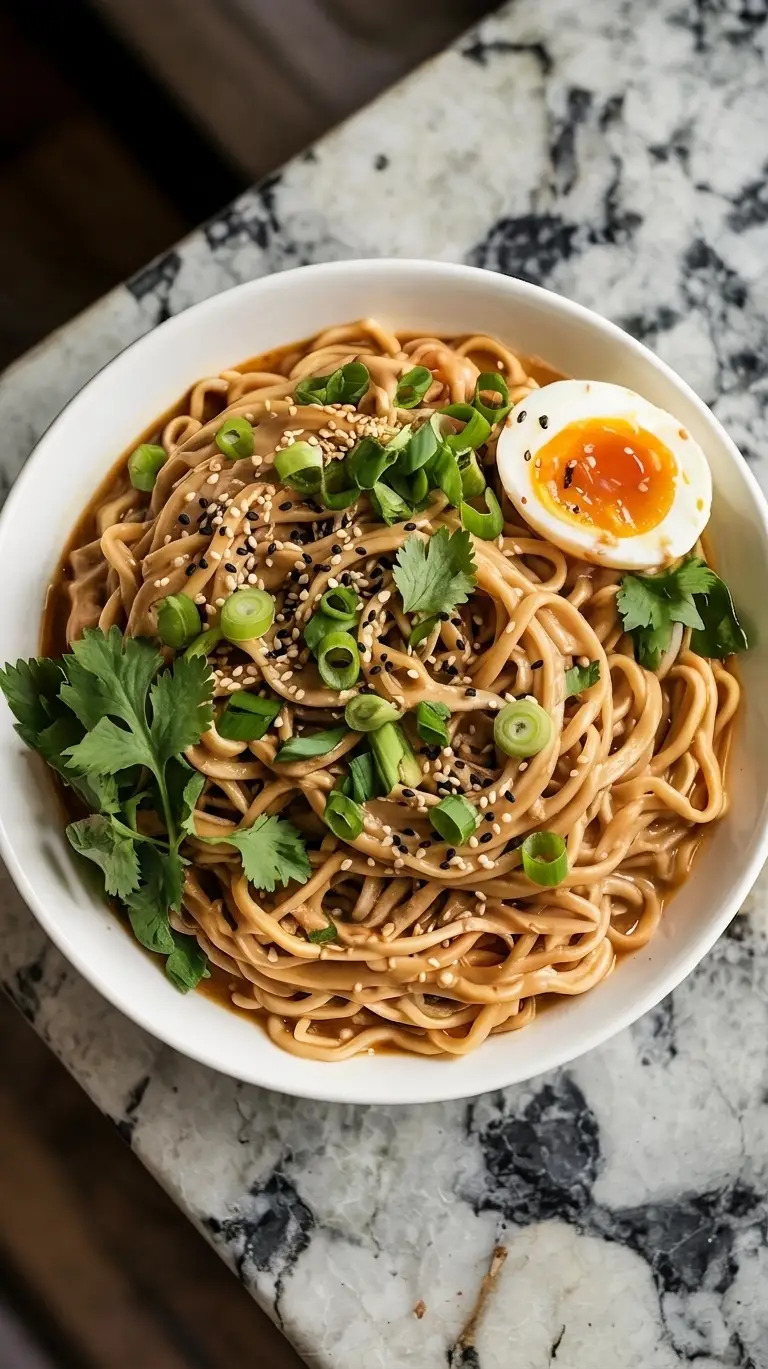
The Peanut Butter Ramen Recipe is the one that surprises people the most and converts them the hardest. Peanut butter in ramen sounds like a fusion experiment that has gone too far, and then you taste it and realize it is really a tantanmen variation with a creamy, nutty broth that has just enough heat and just enough sweetness to keep you coming back for another spoonful. Twenty minutes. Intermediate skill level, which in this context means you are comfortable with a few things happening at once on the stove. The broth comes together from peanut butter, soy sauce, sesame oil, garlic, ginger, and chili paste, and it produces something that tastes like it spent far longer in the pot than it actually did. This is the quick ramen that earns a permanent spot in the weeknight rotation.
How to Build Ramen Broth That Actually Has Depth
Here is the honest truth about ramen broth at home: the longer versions are better, and the shorter versions are still pretty good if you know what you are doing. You do not have to choose between a 12-hour tonkotsu and a packet of seasoning powder. There is real middle ground.
For a 30 minute ramen that actually tastes like something, the key is layering umami from multiple sources rather than trying to compensate with time. Start with a decent store-bought chicken or pork broth, not water, as your base. Add a tablespoon of white or red miso paste, a splash of soy sauce, a teaspoon of sesame oil, fresh garlic, and fresh ginger. Simmer for ten minutes before the noodles go in. The miso brings fermented depth. The sesame oil brings richness. The fresh aromatics bring brightness. Combined, they do about sixty percent of the work that a long-simmered broth does, in a fraction of the time. That is not cheating. That is being smart about weeknight cooking.
For the longer builds like the Kagoshima Ramen Recipe and the Birria Ramen Recipe, the extended cook time is doing something different. You are extracting collagen from connective tissue and bones, which converts to gelatin and gives the broth a body and mouthfeel that no shortcut can fully replicate. Kagoshima ramen is a regional Japanese style from the southernmost prefecture of Kyushu, known for a pork-based broth that is lighter than tonkotsu but still deeply savory. The three-hour cook time sounds like a commitment but most of it is passive. The stove does the work. You do other things.
The Birria Ramen is a Mexican-Japanese fusion bowl that has taken American food culture by storm over the last few years, and for good reason. Birria is a slow-braised spiced meat dish traditionally served with a consomme for dipping. In birria ramen, that consomme becomes the broth, and the result is one of the most interesting easy ramen recipe variations available in home cooking right now. Four hours on the clock, beginner difficulty, and a bowl that reads like you really know what you are doing.
For the easy ramen recipe approach that works on a Wednesday with zero planning, the Muroran Curry Ramen Recipe is the move. Twenty-five minutes, a curry-spiced broth that is warming and deeply savory, and a clean, simple technique that does not require any specialized ingredients you cannot find at a regular grocery store. Muroran is a city in Hokkaido, Japan, known for its curry ramen, and this version brings that regional flavor home in a format that works as a genuinely fast weeknight dinner.
Brothy Ramen vs Dry Asian Noodle Dishes: Which to Make When
Go brothy when you want comfort, warmth, or a meal that feels substantial without being heavy. Go dry noodles when you want something fast, fresh, or built for a crowd that includes people who do not want soup.
The ramen recipes in this collection are all broth-based because ramen is by definition a soup dish. But the Asian Noodle Salad represents the dry noodle category and it is worth understanding why that distinction matters for planning.
Brothy ramen takes more time and more active attention because the broth has to be built, tasted, and adjusted before the noodles go in. The payoff is a bowl with layers of flavor and warmth that a dry noodle dish cannot replicate. Brothy ramen is also harder to make ahead because noodles absorb broth as they sit, turning from springy and distinct to soft and swollen within twenty minutes of cooking. Cook the noodles and the broth separately if you are serving ramen to a group, and combine them in individual bowls rather than one big pot.
Dry Asian noodle recipes like the noodle salad are genuinely make-ahead friendly. The dressing holds, the noodles can be tossed and refrigerated, and the whole thing comes together faster than any ramen variation in this collection. The Asian Noodle Salad clocks in at ten minutes, which puts it in a category of its own. It is the recipe you reach for when you need something to bring to a gathering, when it is too hot to want soup, or when you have fifteen minutes and need dinner to be done.
The practical recommendation is this: if it is cold outside or you have more than thirty minutes and want something satisfying, go brothy ramen. If it is warm, you are short on time, or you are feeding a crowd without access to a warming setup, the noodle salad format wins.
The Ingredients That Separate Decent Ramen from the Real Thing
Miso paste is the single most useful pantry addition for anyone getting into Asian noodle recipes and easy ramen at home. White miso is milder and slightly sweet, good for shio-style and lighter broths. Red miso is more intense and fermented longer, good for heartier winter bowls and the miso tare in a proper miso ramen. Both last months in the refrigerator, cost a few dollars, and add a depth to broth that no powder or concentrate can produce. Pick up both once and you will reach for them constantly.
Gochugaru, the Korean red pepper flake used in Korean ramen and many Korean-influenced noodle dishes, is different from regular red pepper flakes and the substitution does not work cleanly. Gochugaru has a mild, fruity heat and a slightly smoky character that comes from sun-drying the peppers. Regular red pepper flakes are sharper and more acidic. For any korean ramen preparation, gochugaru is the ingredient that makes the dish taste like the real thing rather than a rough approximation. Most Asian grocery stores carry it, and it is increasingly available at mainstream grocery stores in the international aisle.
Fresh ramen noodles produce a noticeably better result than dried noodles or instant noodles in any recipe where the noodle is central to the dish. Fresh noodles have a chew and an alkaline flavor from the kansui water used in their production that dried noodles do not fully replicate. That said, dried ramen noodles are a completely reasonable choice for weeknight cooking and produce a good bowl when the broth is properly built. The noodle matters less than the broth. Get the broth right first.
Sesame oil goes in at the end, not at the beginning. This is the instruction most people skip and it is the one that costs them. Sesame oil has a low smoke point and loses its flavor rapidly under high heat. Added to a finished bowl or stirred into the broth in the last thirty seconds off the heat, it brings a toasted, nutty finish that makes the whole bowl smell like a ramen shop. Added at the start of cooking, it disappears into nothing.
A soft-boiled ramen egg, known as ajitsuke tamago, is a marinated soft-boiled egg with a jammy yolk and a savory-sweet exterior from a soy and mirin marinade. It takes about six to eight minutes to soft-boil and at least four hours to marinate, which means it is a make-ahead topping rather than a last-minute addition. According to Serious Eats, the ideal ramen egg yolk temperature is achieved at exactly 6.5 minutes in boiling water for a large egg, with an immediate ice bath to stop the cooking. This is one of those small details that makes a home bowl look and taste like a restaurant bowl, and it is worth doing once to see the difference.
What to Make Based on Your Time, Season, and Crowd
Ten minutes and no patience: the Asian Noodle Salad is your only correct answer. It does not require a stove, it is served at room temperature or cold, and it produces something genuinely good with almost no effort. Summer is when this one shines most, and it works year-round as a side dish, a lunch, or a potluck contribution that people actually eat rather than politely avoid.
Twenty to thirty minutes on a weeknight: the Peanut Butter Ramen and the Muroran Curry Ramen Recipe are both in this window. Both are quick ramen options that produce a broth with actual character rather than something that tastes like the packet with extra steps. The peanut butter version leans slightly richer and more filling. The curry ramen is warmer and more aromatic. Both work for a solo dinner or for two people on a night when you want something better than takeout without the effort of a long project.
Thirty-five minutes with a little more focus: the Vegan Tantanmen Recipe is the right call. Tantanmen is the Japanese version of Chinese dan dan noodles, a spicy sesame noodle dish that traditionally uses ground pork. This vegan ramen version replaces the pork with a seasoned plant-based protein and builds the broth from sesame paste, soy milk, and chili oil. The result is one of the best vegan ramen bowls available in home cooking, with a richness and heat that satisfies the same craving a meat-based tantanmen would. Fair warning: this one is spicy. Adjust the chili oil to taste before you commit to a full bowl.
A Saturday project with a payoff: the Kagoshima Ramen Recipe and the Birria Ramen Recipe are both four-plus hour recipes that reward the investment with bowls that taste like something you planned. These are not weeknight recipes. They are weekend cooking, the kind where you are doing other things around the house while the pot simmers and the smell builds through every room. The Kagoshima ramen is the regional Japanese bowl for when you want to understand what a properly built pork broth actually tastes like. The birria ramen is the fusion bowl for when you want to make something unexpected that still makes complete sense.
For a soup-forward evening that pairs ramen with the broader comfort food lineup, the Soup and Chowder Recipes collection covers the full range from quick weeknight broths to hearty chowders. And if the noodle craving hits but you want something in a bowl with a protein already sorted, the Chicken Dinner Ideas collection includes several Asian-inspired chicken recipes that pair naturally with noodle sides.
When Ramen Goes Wrong: Four Problems With Fixes
The Broth Tastes Thin and Flat No Matter What You Add
Flat ramen broth is almost always an umami problem, not a salt problem. Adding more soy sauce to a flat broth just makes it salty and flat. The fix is adding fermented depth: a tablespoon of miso paste whisked in off the heat, a small piece of kombu simmered in the broth for ten minutes and then removed, or a splash of fish sauce if you are not cooking vegan. Any one of these adds the glutamates that make broth taste like broth rather than seasoned water. Also check the heat: a broth that has been at a rolling boil rather than a gentle simmer for an extended period loses its delicate flavor compounds and can taste harsh rather than deep. Gentle simmer the whole way.
The Noodles Got Mushy and Absorbed All the Broth
This is a timing problem. Ramen noodles absorb broth rapidly and continue cooking in the hot liquid even after the heat is off. The fix is to cook the noodles separately in plain boiling water to just under done, drain them, and add them to the bowl right before serving rather than simmering them in the broth. This keeps the broth clean and the noodles at the right texture. If you are making a quick ramen for one person who is eating immediately, cooking the noodles in the broth for the last two to three minutes is fine. If you are making ramen for a group or making it ahead, separate the components every time.
The Vegan Ramen Tastes Bland Compared to the Meat Version
Vegan ramen loses the depth that comes from rendered pork fat and long-simmered bone broth, and no amount of vegetable stock fully replaces that. The way to close the gap is layering multiple umami sources aggressively: kombu, dried shiitake mushrooms rehydrated in the broth, white miso, soy sauce, and a finishing drizzle of toasted sesame oil. The Vegan Tantanmen Recipe uses soy milk as the base, which adds a creaminess that vegetable broth alone does not have. If your vegan ramen still tastes thin after all of that, the sesame paste or tahini quantity is probably too low. It is the ingredient doing the most structural flavor work in a plant-based tantanmen and it needs to be present in a quantity you can actually taste.
The Soft-Boiled Egg Yolk Set Completely Hard
A hard yolk on a ramen egg means the egg cooked too long or was not cooled fast enough after boiling. The target is a yolk that is just set at the edges with a soft, jammy center that stays in place when you slice the egg rather than running out. Six and a half minutes in actively boiling water for a large egg, then immediately into an ice bath for at least five minutes. The ice bath stops the cooking. Skip it and the residual heat finishes the yolk while the egg sits on the counter. Also make sure the eggs start at room temperature rather than cold from the refrigerator. Cold eggs dropped into boiling water cook unevenly and the yolk center may still be raw when the white has set.
FAQ
What is the difference between ramen and other Asian noodle recipes?
Ramen is specifically a Japanese noodle soup built on a seasoned broth, wheat noodles made with alkaline water, and a set of toppings that typically include chashu pork, a soft-boiled egg, nori, and scallions. Other Asian noodle dishes use different noodles (rice noodles in pho, egg noodles in lo mein, glass noodles in japchae), different broths or sauces, and come from different culinary traditions across China, Korea, Thailand, Vietnam, and Japan. The category of asian noodle recipes is broad enough to include both brothy soups and dry noodle dishes, stir-fried and cold preparations, and everything from a ten-minute salad to a four-hour project.
What makes a good easy ramen recipe for home cooking?
A good easy ramen recipe at home builds broth flavor from layered umami sources rather than relying on a single flavoring agent or a long cook time. Miso paste, soy sauce, sesame oil, fresh garlic, and fresh ginger together produce a broth with real depth in under thirty minutes. The Muroran Curry Ramen Recipe and the Peanut Butter Ramen are both strong examples of this approach: neither requires hours of simmering, both produce bowls with distinct and interesting flavors, and both are genuinely achievable on a weeknight without specialized equipment or hard-to-find ingredients.
Is there a good vegan ramen recipe that actually tastes rich?
Yes, and the Vegan Tantanmen Recipe is the strongest example in this collection. Tantanmen relies on sesame paste and chili oil as its primary flavor drivers, which means the richness comes from fat and fermented depth rather than from meat. The vegan version replaces the pork with a plant-based protein and uses soy milk to add creaminess to the broth. The result is a vegan ramen that satisfies the same craving the meat version does, with a spicy, nutty, deeply savory bowl that does not taste like a compromise. According to Serious Eats, sesame paste quantity is the most common place where vegan tantanmen falls short in home kitchens, so use more than you think you need.
What is Korean ramen and how is it different from Japanese ramen?
Korean ramen, known as ramyeon in its instant form and interpreted through dishes like kimchi ramen or gochujang-based broths in home cooking, uses a significantly spicier and more intensely flavored base than most Japanese ramen styles. The heat in korean ramen comes primarily from gochugaru and gochujang, both fermented Korean pepper products with a fruity, smoky heat profile. Japanese ramen tends toward more subtle, layered flavors with the richness coming from the broth rather than the spice level. Korean ramen is bolder, faster to put together, and hits differently in terms of the flavor punch it delivers per spoonful. Neither is better. They scratch different cravings.
Can you make ramen broth ahead of time?
Yes, and it actually improves overnight. Ramen broth that has been refrigerated for twelve to twenty-four hours allows the fat to solidify on the surface so it can be easily skimmed, and the overall flavor concentrates and deepens as it rests. Reheat gently over low heat rather than bringing it to a rapid boil, which can make the broth turn slightly cloudy and harsh. For the longer recipes like the Kagoshima Ramen and the Birria Ramen, making the broth a day ahead is genuinely the best approach. Cook the noodles fresh when you are ready to serve.
What is the fastest Asian noodle recipe in this collection?
The Asian Noodle Salad at ten minutes is the fastest by a significant margin. It requires no hot broth, no timing of noodles in liquid, and no toppings that need to be cooked separately. It is also the most portable option in the collection, which makes it useful beyond just weeknight dinners. After that, the Peanut Butter Ramen at twenty minutes is the fastest hot option and the best quick ramen in the collection for a genuinely satisfying bowl on a tight schedule.
All Asian Noodle and Ramen Recipes on CrispyGlaze
Every recipe here is tested, linked, and ready to go. Find the one that fits your night.
- Peanut Butter Ramen Recipe — 20 min, creamy nutty broth, weeknight winner
- Muroran Curry Ramen Recipe — 25 min, Hokkaido regional style, easy
- Vegan Tantanmen Recipe — 35 min, spicy sesame broth, fully plant-based
- Birria Ramen Recipe — 4 hours, Mexican-Japanese fusion, beginner
- Kagoshima Ramen Recipe — 3 hours, regional Japanese pork broth, weekend project
- Asian Noodle Salad — 10 min, no-cook, crowd-friendly
Ramen and Asian noodle recipes reward the people who stop treating them like convenience food and start treating them like the actual cooking they are. You do not need a ramen shop kitchen. You need good broth, the right noodle, and sesame oil added at the end not the beginning. Get those three things right and the bowl you make at home will be better than most of what you can order for fifteen dollars. Which recipe is going in the pot this week?