- Mix your salisbury steak patty ingredients in a large bowl.
Combine 1.5 lbs ground beef, 1/2 cup breadcrumbs, 1 egg, 1/4 cup milk, diced onion, minced garlic, 1 teaspoon Worcestershire sauce, 1 teaspoon salt, and 1/2 teaspoon black pepper. Mix gently with your hands until just combined.
- Form the meat into oval patties
Divide the mixture into 4 equal portions and shape into oval patties about 3/4 inch thick. Don't overwork the meat or you'll end up with tough salisbury steak. Make a slight indent in the center to prevent puffing during cooking.
- Heat oil in a large skillet over medium high heat
Add 2 tablespoons vegetable oil to a large, heavy bottomed skillet. You want it hot enough that the patties sizzle when they hit the pan.
- Cook the salisbury steak patties until browned
Add the patties to the hot skillet and cook for 4 to 5 minutes per side until nicely browned. They don't need to be cooked through completely since they'll finish in the gravy. Transfer to a plate and set aside.
- Start your salisbury steak gravy in the same pan
Don't clean that skillet! All those browned bits are flavor gold. Add 2 tablespoons butter to the pan and let it melt over medium heat.
- Cook the onions and mushrooms for the gravy
Add the sliced onion and mushrooms to the melted butter. Cook for 6 to 8 minutes, stirring occasionally, until the onions are golden and the mushrooms have released their moisture.
- Add flour to create the gravy base
Sprinkle 3 tablespoons flour over the vegetables and stir constantly for 1 to 2 minutes. This cooks out the raw flour taste and creates the thickening base for your gravy.
- Gradually add the beef broth for smooth gravy
Slowly pour in 2 cups beef broth while whisking constantly to prevent lumps. Add 2 tablespoons Worcestershire sauce, 1 tablespoon Dijon mustard, 1/2 teaspoon salt, and 1/4 teaspoon black pepper.
- Bring the salisbury steak gravy to a simmer
Keep whisking until the gravy comes to a gentle simmer and begins to thicken, about 3 to 4 minutes. It should coat the back of a spoon but still be pourable.
- Return the patties to the gravy
Nestle the browned salisbury steak patties back into the gravy, spooning some gravy over the tops. Cover and simmer gently for 10 to 15 minutes until the patties are cooked through.
- Check the internal temperature
The salisbury steak patties should reach 160°F internal temperature. If your gravy gets too thick during simmering, thin it with a bit more beef broth.
- Taste and adjust the seasoning
This is your moment to make the gravy perfect. Add more salt, pepper, Worcestershire, or mustard as needed. The flavor should be rich, savory, and well balanced.
- Serve your salisbury steak immediately
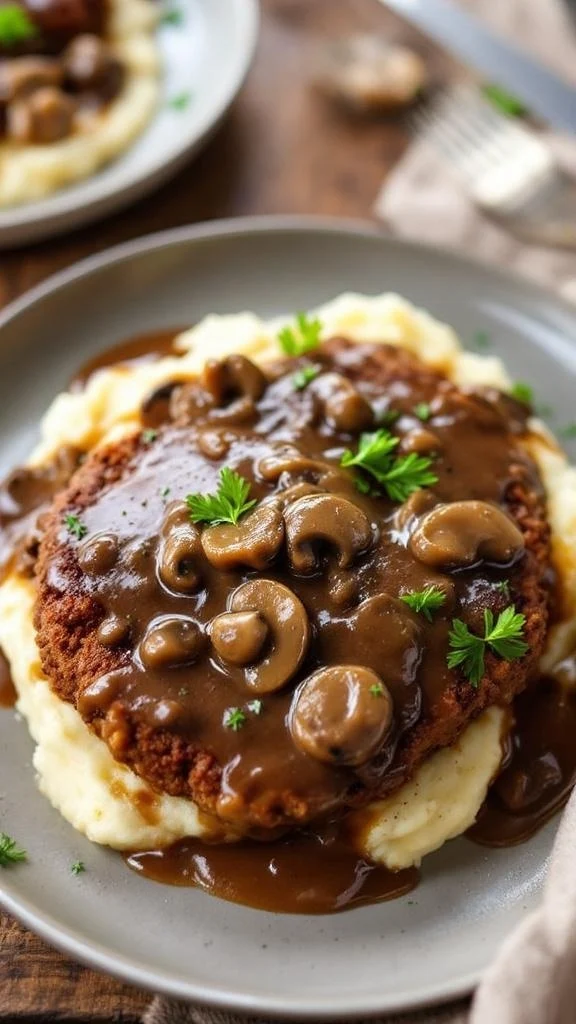
Plate the patties with generous spoonfuls of gravy over mashed potatoes, with a side of vegetables. Sprinkle with fresh parsley because presentation matters.
- Calories:425 kcals
- Fat:24 grams
- Proteins:32 grams
- Carbohydrates:18 grams
Let’s talk about salisbury steak for a minute, because this dish has been done dirty by frozen dinners and school cafeterias for way too long. The real deal is nothing like those sad little hockey pucks swimming in brown mystery liquid that made you question your life choices. Actual salisbury steak is juicy, flavorful beef patties nestled in rich, savory mushroom gravy that’ll make you understand why this was considered fancy dinner material back in the day.
Think of salisbury steak as a hamburger that grew up, went to finishing school, and learned some manners. Same ground beef base, but elevated with seasonings, breadcrumbs for tenderness, and most importantly, that gorgeous gravy situation that makes everything better. This is comfort food that actually comforts instead of disappointing, the kind of dinner that makes you feel like someone’s taking care of you even when you’re cooking it yourself.
The brilliant thing about this recipe is how it delivers restaurant-quality results using ingredients you probably already have. No weird specialty items, no complicated techniques that require culinary school training, just straightforward cooking that yields something deeply satisfying. Your kitchen will smell amazing, your family will be impressed, and you’ll have dinner on the table in under an hour.
Why This Recipe Absolutely Deserves Your Attention
Salisbury steak hits that perfect sweet spot between easy weeknight cooking and special occasion worthy food. You can pull this together on a random Tuesday when you need something more exciting than chicken again, or serve it at a dinner party where people will genuinely be impressed. The versatility alone makes it worth adding to your regular rotation.
What really sets this recipe apart is the texture of the beef patties. They’re tender and juicy instead of dense and dry, which is usually where homemade salisbury steak goes wrong. The secret lies in the mix of ingredients and not overworking the meat. A light touch creates patties that are sturdy enough to hold together but tender enough to cut with just a fork.
Budget Friendly Without Tasting Cheap
Ground beef costs way less than steak but delivers serious satisfaction when prepared properly. You’re looking at maybe ten dollars worth of ingredients that feeds four people generously. Compare that to ordering out or buying prepared meals, and the savings add up quickly. Plus, you control the quality of meat and ingredients, which matters when you’re feeding people you care about.
The gravy uses pan drippings as its base, which means you’re extracting every bit of flavor from ingredients you’ve already paid for. Nothing goes to waste, and those browned bits stuck to the pan transform into the foundation of something truly delicious. This is smart, economical cooking that doesn’t sacrifice an ounce of flavor.
Perfect for Meal Prep Champions
This dish actually improves after sitting for a day, making it ideal for meal prep situations. The flavors meld together as everything hangs out in the fridge, and reheating is a breeze. Make a double batch on Sunday, portion it out with mashed potatoes and veggies, and you’ve got lunch or dinner sorted for most of the week.
Salisbury steak also freezes beautifully, which opens up even more meal planning possibilities. Cook once, eat multiple times, and never feel like you’re eating boring leftovers because this stuff legitimately tastes better the second time around.
The Story Behind Salisbury Steak
Salisbury steak wasn’t invented by some frozen dinner company looking to cut corners. It was actually created by Dr. James Salisbury in the late 1800s as part of a high-protein diet he believed would cure various ailments. The good doctor was convinced that ground beef served with minimal vegetables would solve all kinds of health problems, which sounds wild now but made sense in his particular corner of 19th century medicine.
Dr. Salisbury’s original version was pretty basic, just seasoned ground beef formed into patties and cooked. Over time, home cooks and restaurants started adding their own touches like onions, mushrooms, and that glorious gravy that makes the dish what it is today. The recipe evolved from medicinal meal to comfort food classic, proving that sometimes the best things come from unexpected places.
From Health Food to Comfort Classic
During World War II, salisbury steak gained popularity as an affordable way to serve ground meat that felt more substantial than regular hamburgers. It provided protein during rationing periods while stretching ingredients to feed families on tight budgets. The dish became associated with home cooking and family dinners, cementing its place in American food culture.
Post-war America saw salisbury steak become a staple at diners, in home kitchens, and eventually in TV dinners. The frozen food industry adopted it enthusiastically, though their versions often bore little resemblance to the real thing. Those mass-produced versions are probably why many people have negative associations with salisbury steak today, despite never having tasted a properly made one.
My Personal Discovery
I avoided salisbury steak for years based purely on bad school lunch memories. Those gray patties covered in weird gelatinous gravy scarred an entire generation. Then a friend invited me over for dinner and served this gorgeous plate with actual food on it, and I was confused when she called it salisbury steak. This looked and smelled nothing like what I remembered.
One bite completely changed my perspective. The beef was tender and flavorful, seasoned properly instead of tasting like nothing. The gravy was rich and savory with actual mushrooms and onions adding depth and texture. Everything came together in this deeply satisfying way that made me understand why people used to get excited about this dish.
That night inspired me to learn how to make it properly myself. The recipe turned out to be way simpler than I expected, which made the previous bad versions even more confusing. Why mess up something so straightforward? Good salisbury steak requires basic technique and decent ingredients, nothing fancy or complicated.
Regional Variations Worth Knowing
Different regions put their own spin on salisbury steak based on local preferences and available ingredients. Southern versions often include more onion and sometimes bell peppers in the gravy. Midwestern recipes tend to be simpler, focusing on beef flavor with minimal additions. Some families add different spices or herbs based on their cultural backgrounds, creating unique variations that become treasured family recipes.
Restaurant versions sometimes get fancy with additions like red wine in the gravy or fancy mushroom varieties. These elevated versions prove that salisbury steak can hold its own in upscale settings when given proper treatment. The basic concept is solid enough to support creativity while remaining recognizable.
Cultural Significance Today
Salisbury steak represents that particularly American approach to food where we take something simple and make it our own. It’s not trying to be anything other than satisfying, honest comfort food. In an era of increasingly complicated recipes and trendy ingredients, there’s something refreshing about a dish that’s been basically the same for over a century.
The recent interest in retro cooking has brought salisbury steak back into the spotlight. Younger cooks discovering it for the first time are often surprised by how good it is when made properly. Food bloggers and home cooks are reclaiming it from the frozen food aisle, showing that classics become classics for good reasons.
Quality Makes a Difference
Ground beef with an 80/20 fat ratio creates the juiciest, most flavorful patties. Leaner beef makes dry, dense salisbury steak that no amount of gravy can save. That fat content is crucial for keeping everything moist and delicious during cooking. Don’t be afraid of fat when you’re making burgers or patties, it’s your friend.
Using fresh mushrooms instead of canned transforms the gravy from acceptable to exceptional. Fresh mushrooms have better texture and flavor, plus they release their liquid gradually during cooking rather than adding weird metallic notes like canned versions sometimes do. Cremini mushrooms (baby bellas) have slightly more flavor than white button mushrooms, but either works perfectly.
Good beef broth elevates this dish significantly. Store brand broth will work in a pinch, but better than bouillon or actual homemade stock creates gravy with deeper, richer flavor. This is one place where spending an extra dollar or two makes a noticeable difference in the final result.
Substitution Considerations
Panko breadcrumbs create a lighter texture than regular breadcrumbs, though either works fine. If you only have panko, pulse it a few times in a food processor to make the pieces smaller. For gluten-free versions, gluten-free breadcrumbs and flour work without any other changes to the recipe.
The milk in the patties can be replaced with unsweetened almond milk or oat milk without affecting texture. Dairy-free folks can also use olive oil instead of butter in the gravy, though the flavor will be slightly different. These swaps mean more people can enjoy this comforting dish without feeling left out.
Essential Equipment & Kitchen Wisdom
The Right Pan Makes Everything Easier
A large, heavy-bottomed skillet is essential for this recipe. Cast iron works beautifully if you have it, creating excellent browning and distributing heat evenly. Stainless steel pans also work great and make it easier to see those browned bits that become the gravy base. Non-stick pans are actually not ideal here since we want the meat to stick slightly and create fond (those flavorful brown bits).
Your skillet needs to be big enough to hold all four patties without crowding. Overcrowding drops the pan temperature too much, leading to steaming instead of browning. If your pan isn’t large enough, cook the patties in two batches. Taking this extra time ensures proper browning, which is crucial for both flavor and appearance.
Tools That Simplify the Process
A good whisk makes gravy-making infinitely easier by preventing lumps before they form. Silicone whisks work great in non-stick pans if you end up using one, while metal whisks are fine for everything else. The constant whisking motion while adding liquid is what creates smooth, lump-free gravy.
An instant-read meat thermometer takes the guesswork out of knowing when the patties are done. You’re looking for 160°F internal temperature, which is the safe point for ground beef. Overcooking past this makes the meat dry and tough, while undercooking is obviously not safe.
Kitchen tongs or a sturdy spatula help with flipping patties without breaking them apart. The patties are fairly delicate before they’re fully cooked, so gentle handling prevents them from falling apart. Metal spatulas work better than plastic ones for getting under the patties cleanly.
Smart Preparation Strategies
Get all your ingredients measured and prepped before you start cooking. This French technique called mise en place (everything in its place) makes the actual cooking process so much smoother. When you’re juggling multiple components like patties and gravy, having everything ready to go prevents scrambling and mistakes.
Bring your ground beef to room temperature about 20 minutes before mixing. Cold meat is harder to work with and doesn’t mix as evenly. Room temperature meat also cooks more uniformly, preventing that situation where the outside is overcooked but the inside is still cold.
Professional Tips for Success
Make a small test patty and cook it first to check seasoning. This lets you adjust salt, pepper, or other flavors before forming all your patties. It takes an extra five minutes but prevents the disappointment of underseasoned meat that you can’t fix after cooking.
Wet your hands before forming patties to prevent the meat from sticking to your skin. This makes shaping much easier and cleaner. Also, creating a slight indent in the center of each patty with your thumb prevents them from puffing up into balls during cooking. This keeps them flat and even.
Pro Chef Secrets & Advanced Techniques
Understanding the Science of Tender Patties
The key to tender salisbury steak lies in understanding meat proteins. When you mix ground meat, you’re developing the myosin proteins that create structure. Too much mixing creates too much structure, resulting in dense, tough patties. Minimal mixing keeps the proteins from bonding too much, creating a tender texture.
The breadcrumbs and milk create what’s called a panade, a mixture that keeps meat moist and tender. The breadcrumbs absorb the milk and create tiny pockets of moisture throughout the patty. During cooking, this moisture turns to steam, which keeps everything juicy while also creating a lighter texture.
Fat content is crucial for juiciness. The 80/20 ratio (80% lean, 20% fat) provides enough fat to keep patties moist without being greasy. As the patties cook, some fat renders out, basting the meat from inside. Leaner meat lacks this self-basting ability, leading to dry results no matter how carefully you cook.
Mastering the Maillard Reaction
That beautiful brown crust on your patties isn’t just for looks, it’s the result of the Maillard reaction between proteins and sugars at high heat. This chemical reaction creates hundreds of new flavor compounds that taste savory, meaty, and complex. It’s why browned meat tastes so much better than boiled meat.
Achieving proper Maillard browning requires three things: high heat, dry surface, and patience. The pan must be hot enough (around 350-400°F), the meat surface must be relatively dry (pat with paper towels if needed), and you must resist moving the meat until crust forms.
Advanced Gravy Technique
Professional chefs know that the fond (browned bits) in the pan contains concentrated flavor that should never be wasted. Deglazing with the vegetables’ moisture and then building the roux (flour and fat mixture) directly on that fond creates gravy with incredible depth.
The ratio of fat to flour to liquid matters for gravy consistency. We’re using 2 tablespoons fat (butter), 3 tablespoons flour, and 2 cups liquid (broth). This creates a medium-thick gravy perfect for salisbury steak. For thicker gravy, increase flour to 4 tablespoons. For thinner, decrease to 2 tablespoons.
Cooking the flour (making a roux) removes the starchy, pasty taste of raw flour. A light roux cooks for 2-3 minutes and remains pale, while a darker roux cooks longer and develops toastier flavor. For salisbury steak gravy, a light roux works perfectly, providing thickening power without competing with other flavors.
Temperature Control Mastery
Medium-high heat for browning patties means around 375-400°F. This is hot enough for good Maillard browning without burning. Too hot and you’ll char the outside before the inside cooks. Too cool and you’ll steam instead of sear, creating gray meat instead of beautiful brown.
Once you add the patties to the gravy, reduce to medium-low heat. The goal is gentle simmering, not boiling. Boiling toughens meat proteins and can cause the gravy to break or become grainy. Gentle heat keeps proteins tender while allowing flavors to meld.
Flavor Layering Strategies
Building flavor in layers creates more complex, interesting results. First layer: seasoning the meat mixture. Second layer: browning the patties (Maillard reaction). Third layer: cooking the aromatics (onions and mushrooms). Fourth layer: incorporating the fond. Fifth layer: seasonings in the gravy. Each layer adds depth that makes the final dish extraordinary.
Toast your spices if you want even more flavor. Before adding them to the meat mixture, toast black pepper in a dry skillet for 30 seconds. This brings out aromatic oils and intensifies flavor. It’s an extra step that makes a subtle but noticeable difference.
Restaurant-Level Presentation
Professional plating makes food taste better, it’s psychological but real. Use white plates to make the colors pop. Arrange food with intention rather than plopping it down randomly. Wipe any drips or smears from the plate edges. These small details transform home cooking into restaurant-quality presentation.
Garnish strategically rather than just dumping parsley on top. Place small parsley leaves or finely chopped parsley in deliberate spots. Add a grind of fresh black pepper over the gravy for visual interest. These finishing touches take seconds but elevate the entire presentation.
Common Mistakes to Avoid (And How to Fix Them)
The Overmixing Disaster
Treating your meat mixture like bread dough creates hockey pucks instead of tender patties. Ground meat needs minimal handling to stay tender. Mix only until ingredients are barely combined, even if you still see a few streaks. Those streaks will disappear as you shape the patties, and your texture will be infinitely better.
Using a stand mixer or food processor to mix patties is a rookie mistake that guarantees tough results. Your hands are the perfect tool here, they give you control and feedback that machines can’t provide. Yes, it’s slightly messier, but the texture difference is dramatic.
The Lean Meat Tragedy
Using 93/7 or even 90/10 ground beef in an attempt to make this “healthier” backfires completely. Those lean blends create dry, flavorless patties that no amount of gravy can save. The fat in 80/20 beef is essential for flavor, moisture, and texture. Don’t sacrifice good eating for marginal calorie savings.
Ground sirloin sounds fancy but lacks the fat needed for juicy salisbury steak. Save the expensive lean cuts for preparations where they shine. For this dish, regular ground chuck (80/20) delivers better results at a lower price point.
The High Heat Horror
Cranking the heat to maximum thinking it will brown better just burns the outside while leaving the inside raw. Medium-high heat provides the sweet spot where proper browning happens without burning. If your smoke alarm goes off, your heat is too high. Lower it and proceed more carefully.
Flipping patties too early creates torn, broken meat instead of intact patties with beautiful crust. The meat will naturally release from the pan once a proper crust forms. If it’s sticking stubbornly, it needs more time. Patience rewards you with perfect results, rushing ruins everything.
The Gravy Lump Catastrophe
Dumping all the liquid in at once creates lumps that are nearly impossible to smooth out. Those flour-coated vegetables need gradual liquid addition with constant whisking. Each addition should be fully incorporated before adding more. This slow approach prevents lumps and creates silky smooth gravy.
Not whisking constantly while adding liquid gives flour time to form clumps. Your whisk should never stop moving during the liquid addition phase. Think of it as an arm workout that results in delicious gravy. Stop whisking and you’ll have lumpy gravy that looks terrible and feels weird in your mouth.
Skipping the flour-cooking step leaves you with gravy that tastes like paste. That flour needs at least 60 seconds of cooking before any liquid touches it. This removes the starchy raw flour taste and activates the thickening properties properly. Rushing this step always shows in the final flavor.
The Boiling Blunder
Letting the gravy boil rapidly while the patties cook inside turns tender meat into rubber. Boiling causes meat proteins to contract aggressively, squeezing out moisture and creating tough texture. Gentle simmering is all you need. Those tiny bubbles around the edges are perfect, volcanic eruptions are not.
Leaving the skillet uncovered during the final cooking means moisture evaporates too quickly. The lid traps steam that keeps everything moist while the patties finish cooking through. Without it, your gravy reduces too much and the tops of the patties can dry out.
The Underseasoning Disappointment
Being timid with salt creates bland salisbury steak that tastes like nothing despite decent technique. Ground beef needs assertive seasoning to shine. The salt amounts in this recipe are starting points, not rigid rules. Taste and adjust until the flavor makes you happy.
Forgetting to taste the gravy before serving means missing the chance to fix any issues. Always taste and adjust seasoning as the final step. This single habit separates okay cooks from great ones. Your palate is the best measuring tool you have.
The Temperature Guessing Game
Cutting into patties to check doneness releases all the juices, leaving you with dry meat. Invest in an instant-read thermometer, they cost less than fifteen dollars and eliminate all guesswork. Insert it into the thickest part of a patty, and you’ll know exactly when dinner is ready.
Serving lukewarm food because you got distracted kills the entire eating experience. Salisbury steak should be served hot, with the gravy still gently bubbling. If you need to wait, keep the skillet on the lowest heat setting. Hot food simply tastes better than warm food.
Alternatives & Substitutions That Actually Work
Protein Variations Beyond Beef
Ground turkey creates a lighter version that’s lower in fat and calories. Mix in 2 tablespoons of olive oil to compensate for turkey’s leanness. The flavor will be milder, so consider adding an extra clove of garlic and a bit more Worcestershire sauce. Turkey salisbury steak works great for anyone avoiding red meat.
Ground pork mixed half and half with beef creates incredibly juicy, flavorful patties. Pork adds richness and a slightly different flavor profile that’s really delicious. This combination is common in meatloaf and works beautifully here too. Just make sure to cook to 160°F since pork is involved.
Ground lamb makes a more sophisticated version with earthy, complex flavor. Lamb pairs beautifully with mushrooms and works especially well if you add a pinch of dried thyme to the gravy. This variation feels fancy enough for dinner parties while using the same simple technique.
Plant-based ground meat substitutes work surprisingly well for vegetarian versions. Brands like Impossible or Beyond cook and brown similarly to real beef. Follow the package directions regarding fat content, you might need to add oil if your substitute is very lean. The gravy remains the same, just use vegetable broth instead of beef broth.
Binder Alternatives for Dietary Needs
Gluten-free breadcrumbs or crushed gluten-free crackers work perfectly for anyone avoiding gluten. Almond meal creates a lower-carb option with a slightly nutty flavor that’s actually really good. Crushed cornflakes might sound weird but create excellent texture and are naturally gluten-free.
Rolled oats pulsed briefly in a food processor make great breadcrumb substitutes. They add fiber and create tender patties. Old-fashioned oats work better than instant, which can get mushy. This substitution is budget-friendly and adds nutritional value.
For egg-free versions, a flax egg (1 tablespoon ground flaxseed mixed with 3 tablespoons water, left to gel for 5 minutes) works as a binder. The texture will be slightly different but still good. This makes the recipe accessible to anyone with egg allergies.
Gravy Modifications for Different Diets
Dairy-free folks can use olive oil or vegan butter instead of regular butter for the gravy. The flavor changes slightly but remains delicious. Coconut oil works too, though it adds a subtle coconut taste that some people love and others don’t.
For gluten-free gravy, cornstarch works beautifully as a flour substitute. Use 2 tablespoons cornstarch mixed with 2 tablespoons cold water, then whisk it into the simmering liquid. This creates perfectly thick gravy without any gluten. Arrowroot powder also works using the same method.
Lower sodium versions use low-sodium beef broth and reduce or eliminate added salt. The Worcestershire sauce and Dijon mustard provide plenty of flavor even with less salt. Let people add salt at the table if they want more. This makes the dish more suitable for anyone watching sodium intake.
Mushroom-free gravy simply omits the mushrooms and increases the onions slightly. You can add sliced bell peppers for texture and color if you want. Some people genuinely don’t like mushrooms, and that’s okay. The gravy will still be delicious without them.
Creative Flavor Additions
Italian-style salisbury steak incorporates Italian seasoning into the meat mixture and adds a splash of red wine to the gravy. Fresh basil instead of parsley as garnish completes the transformation. This variation pairs beautifully with garlic mashed potatoes.
Adding a tablespoon of tomato paste to the gravy creates deeper color and richer flavor. The umami in tomato paste amplifies the beefiness without making things taste like tomatoes. This is a professional chef trick that works in any brown gravy.
Smoked paprika in the meat mixture adds subtle smoky depth that’s really interesting. Start with 1/2 teaspoon and increase if you like the flavor. Sweet paprika works too for color without the smoke. Either way, paprika adds another layer of complexity.
Fresh thyme sprigs simmered in the gravy infuse it with earthy, aromatic flavor. Remove them before serving, just like bay leaves. Dried thyme works too, use about 1/2 teaspoon added with the flour. Thyme and mushrooms are natural partners that create restaurant-level flavor.
Flavor Variations & Creative Twists
French Onion Style
Transform this into French onion salisbury steak by caramelizing the onions slowly for 20 minutes before adding mushrooms. The deep sweetness of properly caramelized onions creates incredible depth. Top each patty with a slice of Gruyere or Swiss cheese during the last few minutes of cooking, letting it melt over everything. This variation is decadent and impressive.
Add a splash of dry red wine when deglazing the pan for even more French-inspired flavor. The wine adds acidity and complexity that elevates the entire dish. Let it reduce by half before adding the flour to cook off the alcohol while keeping the flavor.
Mushroom Lover’s Dream
Double or even triple the mushrooms for anyone obsessed with fungi. Use a variety like cremini, shiitake, and oyster mushrooms for complex flavor and interesting texture. Different mushrooms contribute different notes, creating a more sophisticated gravy.
Add a splash of cream at the end for creamy mushroom gravy that’s absolutely luxurious. Just a quarter cup transforms the gravy into something silky and rich. Cream also mellows the flavors slightly, creating a more cohesive sauce.
Spicy Cajun Version
Season the meat with Cajun spice blend instead of just salt and pepper for a Louisiana-inspired twist. Add diced bell peppers and celery to the gravy along with the onions for holy trinity vegetables. A dash of hot sauce and pinch of cayenne creates heat that’s balanced by the rich gravy.
Serve over cheese grits instead of mashed potatoes for full Southern comfort vibes. The creamy grits soak up that spicy gravy beautifully. Add some collard greens on the side and you’ve got a meal that would make any Southern cook proud.
Steakhouse Inspired
Add a tablespoon of steak seasoning to the meat mixture for bold, peppery flavor. Make the gravy extra rich by adding a pat of butter at the end (called mounting with butter in fancy cooking terms). Top with crispy fried onions for textural contrast and visual appeal.
Serve with loaded baked potato instead of mashed for a steakhouse-style presentation. The crispy potato skin and fluffy interior complement the tender patties perfectly. Add a wedge salad and you’ve basically recreated an upscale steakhouse meal at home.
Asian Fusion Twist
Replace Worcestershire with soy sauce and add fresh grated ginger to the meat mixture. Use shiitake mushrooms exclusively in the gravy and add a splash of sesame oil at the end. Garnish with sliced green onions instead of parsley and serve over rice instead of mashed potatoes.
This fusion version maintains the comfort food appeal while introducing interesting new flavors. The technique stays the same, proving how versatile this basic approach really is. Serve with stir-fried vegetables for a complete meal.
Bacon Enhanced Version
Cook bacon first and use the rendered fat instead of oil for browning the patties. Crumble the cooked bacon and add it to the gravy along with the mushrooms. Everything is better with bacon, and salisbury steak is no exception.
The smoky, salty bacon bits add pops of intense flavor throughout the gravy. This variation is not subtle, it’s indulgent and unapologetic. Perfect for weekend dinners when you’re not worrying about anything except enjoying delicious food.
Serving Suggestions & Pairings
Classic Accompaniments
Mashed potatoes are the traditional and arguably best choice for salisbury steak. They provide a creamy, mild base that lets the meat and gravy shine. Make them buttery and well-seasoned with plenty of cream or milk. Lumpy rustic mashed potatoes work great, or go smooth and silky if that’s your preference.
Egg noodles create a different but equally delicious presentation. The noodles soak up gravy beautifully and add a slightly different texture experience. Toss them with a bit of butter and parsley before plating. This combination feels more casual and weeknight-friendly.
Rice works surprisingly well, especially if you’re avoiding potatoes for any reason. White rice is neutral and absorbs gravy perfectly. Brown rice adds nutty flavor and more nutrition. Even cauliflower rice works for low-carb folks, just make sure the gravy is flavorful enough to compensate.
Vegetable Sides That Complete the Meal
Green beans are classic for good reason. Their slight crunch and fresh flavor balance the rich meat and gravy. Blanch them briefly and toss with butter, or roast them with garlic for more depth. Either way, green vegetables add brightness that rounds out the plate.
Roasted carrots bring sweetness that contrasts beautifully with the savory salisbury steak. Their natural sugars caramelize during roasting, creating complex flavor. Toss them with a bit of honey and thyme for extra deliciousness. The bright orange color also makes plates look more appealing.
Steamed broccoli might seem boring, but it works perfectly here. The mild flavor doesn’t compete with the main dish, and the texture provides variety. Plus, broccoli loves soaking up gravy, making each bite more interesting. Season simply with butter, salt, and lemon juice.
Brussels sprouts roasted until crispy on the edges create a more sophisticated side. Their slight bitterness balances the rich gravy beautifully. Toss them with bacon and balsamic vinegar for a side dish that could almost steal the show.
Bread Choices for Soaking Up Gravy
Crusty bread is essential for wiping up every last bit of that gorgeous gravy. French bread, sourdough, or Italian bread all work beautifully. Toast it lightly if you want extra texture. There’s something deeply satisfying about using bread to get every drop of sauce.
Buttermilk biscuits create a Southern-style meal that’s incredibly comforting. Split them open and ladle gravy over the top along with the salisbury steak. This combination takes comfort food to its logical conclusion.
Garlic bread adds another flavor dimension that complements rather than competes. The garlic echoes what’s already in the dish, creating cohesive flavors. Plus, garlic bread makes everything better, that’s just science.
Beverage Pairings Worth Considering
Red wine pairs beautifully with beef and mushrooms. A medium-bodied red like Merlot or Côtes du Rhône complements without overwhelming. The tannins in red wine cut through the richness of the gravy, cleansing your palate between bites.
Beer works great too, especially darker varieties like brown ales or porters. The malty sweetness and slight bitterness balance the savory meat perfectly. Beer also feels more casual, which matches the comfort food vibe.
For non-alcoholic options, sparkling water with lemon provides palate-cleansing refreshment. The bubbles and acidity cut through richness without competing with flavors. Iced tea (sweetened or unsweetened based on preference) also works well and feels appropriately homey.
Presentation Ideas for Different Occasions
Weeknight family dinners call for simple plating straight from the skillet. Serve everything in the middle of the table and let people help themselves. This casual approach fits the comfort food nature perfectly. Use the skillet as a serving dish to keep everything hot.
Date nights at home benefit from individual plating with attention to presentation. Use your nicest plates, arrange everything thoughtfully, dim the lights, and add a candle. Salisbury steak can absolutely be romantic when you treat it with intention. The effort shows you care.
Potluck situations work great because this dish travels well and stays hot. Transfer to a slow cooker set on warm for serving. Bring the sides separately so people can customize their plates. Everyone loves salisbury steak at potlucks because it’s familiar and reliably delicious.
Storage & Reheating Guide
Proper Storage Methods
Let salisbury steak cool to room temperature before storing, but don’t leave it out for more than two hours. Transfer the patties and gravy to an airtight container together. The gravy keeps the meat moist during storage and prevents it from drying out.
Store in the refrigerator for up to four days. The flavors actually improve after a day as everything melds together. Keep it toward the back of the fridge where temperature is most consistent. Make sure your container seals well to prevent the strong gravy smell from permeating everything else.
Store sides separately from the salisbury steak. Mashed potatoes don’t keep as well as the meat and can get weird textures when mixed with gravy for extended periods. Vegetables should definitely be stored separately and reheated independently for best results.
Reheating for Best Results
Stovetop reheating gives you the most control and best texture. Place the salisbury steak and gravy in a skillet over medium-low heat. Add a splash of beef broth if the gravy has thickened too much during storage. Cover and heat gently until everything is hot throughout, about 10 minutes.
Microwave reheating works fine for individual portions. Transfer a patty with gravy to a microwave-safe dish, add a tablespoon of water or broth, cover loosely with a damp paper towel, and heat in 1-minute intervals. Stir the gravy between intervals to distribute heat evenly. The paper towel prevents splatters while adding moisture.
Oven reheating works best for larger portions. Place everything in an oven-safe dish, add a splash of liquid, cover tightly with foil, and heat at 325°F for about 20 minutes. Check and stir halfway through. This gentle heat warms everything evenly without drying anything out.
Never reheat more than once. Each heating and cooling cycle increases food safety risks and degrades quality. Only reheat what you plan to eat immediately.
Freezing Guidelines and Best Practices
Salisbury steak freezes beautifully for up to three months. Cool completely first, then transfer patties and gravy to freezer-safe containers or heavy-duty freezer bags. Remove as much air as possible to prevent freezer burn. Label with the date so you know how long it’s been frozen.
Freeze in meal-sized portions rather than one big container. This lets you thaw only what you need without waste. Individual portions are perfect for quick lunches or solo dinners. Family-sized portions work great for easy weeknight meals.
Don’t freeze mashed potatoes or most vegetables with the salisbury steak. They don’t freeze well and turn mushy or grainy when thawed. Freeze just the meat and gravy, then make fresh sides when you’re ready to serve.
Thaw frozen salisbury steak in the refrigerator overnight for best results. This slow thawing maintains texture and keeps everything food-safe. Plan ahead so you’re not stuck trying to quick-thaw at the last minute. In a pinch, you can thaw in the microwave using the defrost setting, but the texture won’t be quite as good.
Reheat from frozen by placing in a covered skillet over low heat with a splash of broth. It will take about 20-25 minutes, stirring occasionally as it thaws and heats. This method works when you forgot to thaw ahead but still want a homemade meal.
FAQ (Frequently Asked Questions)
Can I make salisbury steak ahead of time? Absolutely! Form the patties up to 24 hours ahead and refrigerate covered. You can even make the entire dish ahead, then reheat gently before serving. The flavors actually improve after sitting overnight as everything melds together. This makes it perfect for entertaining or meal prep.
What’s the difference between salisbury steak and hamburger steak? Salisbury steak contains breadcrumbs, egg, and seasonings mixed into the meat, creating a more meatloaf-like texture. Hamburger steak is typically just seasoned ground beef formed into patties. Both get served with gravy, but salisbury steak is more tender and flavorful due to those additions.
Why are my patties falling apart? Either you didn’t include enough binders (egg and breadcrumbs) or the mixture needed a few minutes to rest before forming. The egg needs time to hydrate the breadcrumbs and bind everything together. Let the mixture sit for 5 minutes before shaping, and make sure you’re using the full amounts of egg and breadcrumbs.
Can I cook this entirely in the oven? Sure! Brown the patties in an oven-safe skillet on the stovetop first, make the gravy, return patties to the gravy, cover tightly, and transfer to a 350°F oven for 25-30 minutes. This method works great if your stovetop is busy with sides or you prefer oven cooking.
What if I don’t have beef broth? Chicken broth works fine, though the gravy will be lighter in color and flavor. Vegetable broth also works. In a pinch, use water mixed with a beef bouillon cube or better than bouillon paste. Even plain water will work, though you’ll need to season more aggressively.
How do I fix lumpy gravy? Pour it through a fine-mesh strainer into a clean pan, pressing to push everything through except the lumps. Alternatively, use an immersion blender to smooth it out right in the pan. Next time, add liquid more gradually while whisking constantly to prevent lumps from forming.
Can kids eat this? Definitely! Most children love salisbury steak because it’s similar to burgers and meatloaf, both kid favorites. The gravy makes it extra appealing. If you’re feeding picky eaters, you might reduce the garlic and onions slightly or mince them extra fine so they’re less noticeable.
Is this recipe good for meal prep? This is excellent for meal prep! It reheats beautifully, actually tastes better after a day, and portions easily into containers. Make it on Sunday, portion into containers with sides, and you’ve got lunches or dinners sorted for several days. The leftovers genuinely don’t feel like leftovers.
What if my gravy is too thick or too thin? Too thick: Whisk in beef broth a tablespoon at a time until it reaches your preferred consistency. Too thin: Mix a teaspoon of flour or cornstarch with a tablespoon of cold water, whisk it into the simmering gravy, and cook for 2-3 minutes to thicken. Both problems are easily fixable.
Can I make this in a slow cooker? You can, but brown the patties first in a skillet for better flavor and appearance. Transfer to a slow cooker, add the gravy ingredients (you can skip the flour and thicken at the end with a cornstarch slurry), and cook on LOW for 4-6 hours. The texture won’t be quite the same as stovetop, but it’s convenient for busy days.
Troubleshooting Guide
When Your Patties Are Too Dense
Dense, tough patties usually result from overmixing the meat or using too-lean ground beef. Unfortunately, you can’t fix this once the patties are cooked. Next time, mix just until combined and use 80/20 beef. Your hands should barely touch the meat, treating it gently like you would biscuit dough.
If you realize the mixture feels too dense before cooking, try gently folding in a tablespoon or two of milk. This adds moisture and can help lighten the texture slightly. Won’t fix severe overmixing, but might help minor cases.
Dealing with Broken or Crumbling Patties
Patties falling apart during cooking means not enough binder or the mixture was too dry. If it happens mid-cook, carefully flip what you can and let them finish cooking even if they’re not perfect ovals. They’ll still taste good once swimming in gravy.
For next time, make sure you’re using a full egg and measuring breadcrumbs correctly. Letting the mixture rest for 5-10 minutes before forming helps the egg hydrate the breadcrumbs, creating better binding. Wetting your hands while forming also helps compact the patties enough to hold together.
Fixing Gravy That Won’t Thicken
Gravy refusing to thicken means either the flour wasn’t cooked enough, the mixture isn’t hot enough, or you need more thickening agent. Make sure the gravy is actually simmering (gently bubbling) not just warm. The cornstarch or flour needs heat to activate properly.
Make an emergency slurry (1 tablespoon cornstarch mixed with 1 tablespoon cold water) and whisk it into the simmering gravy. Cook for 2-3 more minutes while whisking. This fixes thin gravy every time. Keep extra cornstarch handy when making gravy, it’s the easiest fix for thickness issues.
Rescuing Overcooked, Dry Patties
If you overcooked the patties and they’re dry, your best bet is making the gravy extra flavorful and plentiful. The moisture from abundant gravy helps rehydrate the meat somewhat. Serve with plenty of sauce and encourage people to let their patties soak in it for a minute before eating.
Add a splash of cream or extra butter to the gravy to make it richer and more coating. This provides additional moisture and fat that helps mask any dryness. It’s not perfect, but it’s damage control that makes the meal more enjoyable.
When Everything Cooks Unevenly
Unevenly cooked patties usually mean they weren’t the same size or thickness. Always divide the meat into equal portions and shape to consistent thickness. Using a kitchen scale to weigh portions eliminates guesswork and ensures even cooking across all patties.
If some patties finish before others, remove the done ones and keep them warm on a plate tented with foil. Let the thicker ones continue cooking until they reach 160°F. Better to serve all patties properly cooked than serve some perfect and some underdone.
Preventing Gravy That Separates or Breaks
Broken gravy looks oily with fat separating from the liquid, usually from too high heat or adding cold liquid to hot roux. If it breaks, try whisking vigorously while slowly drizzling in a tablespoon of cold water. This can bring it back together.
For prevention, maintain steady heat while making gravy and add liquids gradually at similar temperatures. Don’t let gravy boil hard, gentle simmering is all you need. These simple precautions prevent breaking before it happens.
Final Thoughts on Salisbury Steak
There’s something deeply satisfying about transforming humble ground beef into something that feels special. Salisbury steak proves that comfort food doesn’t need to be complicated or expensive to deliver serious satisfaction. Simple ingredients, straightforward technique, and a bit of care create results that taste like you’ve been cooking all day.
This recipe has fed families for generations because it works. It’s forgiving enough for beginners, reliable enough for experienced cooks, and delicious enough that everyone actually wants to eat it. Those qualities make it invaluable in any home cook’s repertoire. Having a dish you can count on takes pressure off dinner planning.
The best part about mastering salisbury steak is how it opens doors to endless variations. Once you understand the basic technique of forming patties and making gravy, you can experiment with different flavors, proteins, and additions. Each variation teaches you something new while building on solid fundamentals you’ve already learned.
This is the kind of food that creates memories around the dinner table. It’s conversation-friendly because it doesn’t require constant attention once it’s plated. Everyone can relax and enjoy both the food and each other’s company. That’s what cooking should be about, bringing people together over meals that nourish body and soul.
Whether you’re cooking for your family on a busy Tuesday, meal prepping for the week ahead, or serving dinner to friends, salisbury steak delivers every single time. It’s honest food that doesn’t pretend to be anything other than delicious. Sometimes that’s exactly what we need.
Now go forth and make some salisbury steak that would make Dr. Salisbury proud, even though his version probably didn’t include this much garlic or any of this amazing gravy. Trust the process, don’t overthink it, and prepare for the satisfaction of serving something truly comforting and delicious.