- Prepare the Au Jus
Start by placing your medium saucepan on the stove over medium heat. Add the olive oil and let it warm up for about 30 seconds until it shimmers and flows easily when you tilt the pan. You're not trying to smoke it, just get it warm enough to cook those onions properly.
Take your thinly sliced onions and add them all to the pan in one go. Don't be shy here, they're going to cook down significantly, so what looks like a mountain of onions will shrink to a manageable amount.
Stir the onions every couple of minutes, making sure they're cooking evenly and not sticking to the bottom of the pan. You want them to slowly turn golden brown, which takes about 10 minutes of patient cooking. This isn't the time to crank up the heat and rush things, slow caramelization develops sweet, complex flavors that fast cooking can't replicate.
Watch for that beautiful golden color to develop, not the sad translucent look of quickly cooked onions, but actual caramelization where the sugars brown and create depth. The onions should be soft, sweet-smelling, and a gorgeous amber color when they're ready.
Once your onions reach that perfect caramelized state, add the minced garlic and stir it around for about a minute. Garlic cooks way faster than onions, so it goes in at the end to prevent burning. You'll know it's ready when your kitchen smells absolutely incredible and you're questioning whether you actually need to finish making sandwiches or if you could just eat this onion-garlic mixture with a spoon.
- Add Broth
Pour all four cups of beef broth into your pan with those gorgeous caramelized onions and garlic. Listen to that satisfying sizzle as the cold liquid hits the hot pan, that's flavor development happening right there.
Add your Worcestershire sauce and soy sauce, stirring everything together so the liquids combine properly. These two ingredients might seem like small additions, but they're doing heavy lifting in terms of flavor complexity.
Bring the whole mixture to a simmer, which means you'll see small bubbles breaking the surface but not a full rolling boil. Once it's simmering, reduce your heat to medium-low and let it cook for 15-20 minutes.
During this simmering time, the flavors are melding together and concentrating as some of the liquid evaporates. Give it a stir every 5 minutes or so, mostly just to check on it and make sure nothing's sticking to the bottom.
After 15-20 minutes, taste your au jus and season with salt and black pepper. Start with maybe half a teaspoon of salt, stir, taste, and add more if needed. The soy sauce and Worcestershire already contribute saltiness, so go easy at first.
The au jus should taste rich, savory, slightly sweet from those caramelized onions, and complex from all the umami ingredients. If it seems thin or weak, let it simmer longer to concentrate. If it's too strong, add a splash more broth to dilute slightly.
- Heat the Roast Beef
While your au jus is simmering away, grab a separate skillet or pan and place it over medium-low heat. You're not cooking the roast beef here, it's already cooked, you're just warming it up so your sandwich isn't filled with cold meat.
Arrange your roast beef slices in the pan, spreading them out somewhat so they heat evenly. If you have a lot of beef and it's piling up, work in batches rather than trying to heat everything at once in a massive pile.
Heat the beef for about 5 minutes, flipping or stirring occasionally to ensure even warming throughout. You want it warm all the way through but not dried out or overcooked, which would make it tough and chewy.
Here's a pro move: some people like to actually dip the beef into the au jus while heating it. You can ladle some of your au jus into the pan with the beef, letting it warm in the flavorful liquid. This adds extra flavor and keeps the meat super moist and juicy.
If you go the au jus dipping route, just remember that you're reducing your dipping sauce supply, so make sure you've got enough left for actual sandwich dipping. You might want to reserve some au jus specifically for serving rather than using it all for heating the beef.
- Prepare the Rolls
While everything else is happening, preheat your oven to 350°F. This temperature is perfect for toasting bread without turning it into hockey pucks, giving you that nice crispy exterior while keeping the interior soft enough to absorb au jus.
Slice your hoagie rolls or baguette portions lengthwise, cutting almost but not quite all the way through. You want them to open like books rather than being completely separated into top and bottom halves, which makes assembly easier and prevents filling from falling out.
Arrange the sliced rolls cut-side up on your baking sheet. If you're using cheese, now's the time to lay those slices on the bottom half of each roll. Provolone or Swiss, whatever you're using, place it so it'll melt directly onto the bread and create a barrier against soggy-bread syndrome.
Some people like to brush the cut sides of the bread with a little butter or olive oil before toasting, which creates even better crispy texture and adds richness. This is optional but highly recommended if you want next-level bread situation happening.
- Toast the Rolls
Slide your baking sheet into the preheated oven and let those rolls toast for about 5-7 minutes. You're watching for lightly golden edges and melted cheese if you're using it, not burned bread that tastes like charcoal and regret.
Keep an eye on things because oven temperatures vary and some ovens run hotter than their settings suggest. If your rolls are browning too fast, pull them out early. If they're not toasting enough after 7 minutes, give them another minute or two.
The cheese should be fully melted and maybe just starting to bubble around the edges. The bread should be crispy on the toasted side but still have some give when you press it, not rock-hard all the way through.
Once they hit that perfect level of toastiness, remove the baking sheet from the oven and let the rolls cool for just a minute. They'll be volcanic hot right out of the oven, and you need them handleable for assembly without burning off your fingerprints.
- Assemble the Sandwiches
Now comes the fun part where everything comes together into sandwich form. Take your toasted rolls, which should still be warm and have that gorgeous melted cheese if you're using it, and get ready to pile on the beef.
Layer the warm roast beef onto the bottom half of each roll, and don't be stingy here. This is supposed to be a substantial sandwich, not a sad little meat garnish situation. Pile it high enough that you can see it's definitely beef-forward in the beef-to-bread ratio.
Try to arrange the beef somewhat neatly rather than just throwing it on in a chaotic pile. Layers work better than clumps because they create more even distribution and make each bite similar to the last in terms of meat content.
If you want to get fancy, you can spoon a little au jus directly onto the beef before closing the sandwich. This pre-moistens everything and adds extra flavor, though it also means your first dip won't be as dramatic since the bread is already somewhat saturated.
Close the sandwich gently, pressing down just slightly to help everything stick together. You don't want to squash it flat, but a little gentle pressure helps the melted cheese glue everything in place.
- Serve
Pour the remaining au jus into small individual serving bowls, one for each person. Make sure everyone gets enough for proper dipping, which probably means at least a cup per sandwich depending on how enthusiastically people dip.
If you made that parsley garnish, now's the time to sprinkle it over the au jus or on top of the assembled sandwiches. It adds a pop of color that makes everything look more restaurant-quality, though it's completely optional and doesn't affect flavor much.
Place each sandwich on a plate with its corresponding bowl of au jus right next to it. Some people like to cut their sandwiches in half for easier handling, though this is personal preference and not necessary.
Serve immediately while everything's hot and the bread is at peak crispiness. French dip sandwiches wait for no one, they're best enjoyed fresh when the temperature contrast between hot au jus and warm sandwich is at its most satisfying.
Grab some napkins, probably more than you think you'll need, because French dip sandwiches are inherently messy and anyone who claims otherwise is lying. Embrace the mess, it's part of the experience.
- Calories:350 kcals
- Fat:12 grams
- Proteins:30 grams
- Carbohydrates:30 grams
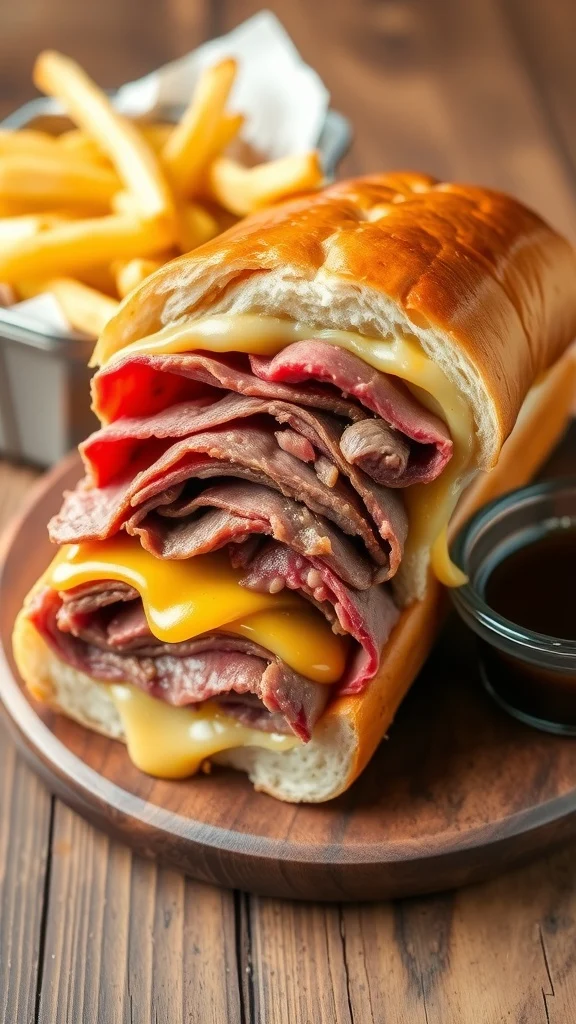
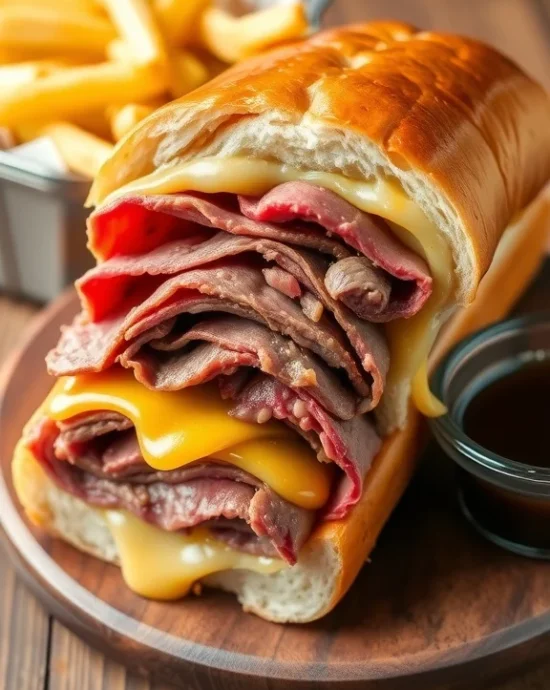
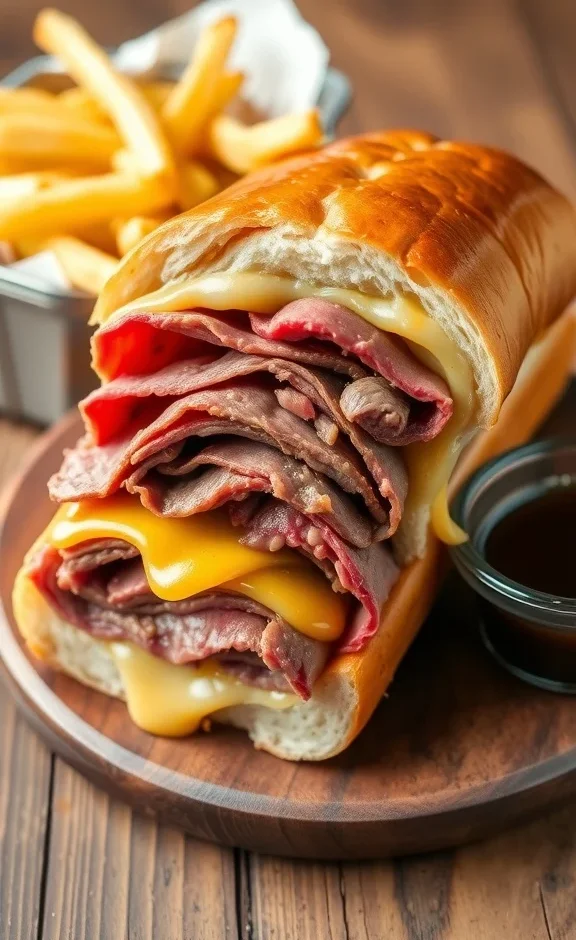
French dip sandwich isn’t just food, it’s an experience that involves dunking perfectly toasted bread loaded with tender roast beef into a bowl of liquid gold that some fancy people call au jus but the rest of us just know as really, really good beef juice. This is the sandwich that makes grown adults forget their table manners and dip with reckless abandon, not caring about drips or splashes because every sauce-soaked bite is absolutely worth it.
Most people think French dip sandwiches require some kind of chef wizardry or access to professional kitchens with equipment that costs more than your car. Truth is, this whole thing comes together in about an hour using stuff you can grab at any grocery store. No special training required, no fancy techniques to master, just straightforward cooking that results in sandwich shop quality without the sandwich shop prices.
The magic happens when that crusty roll meets the savory au jus for the first time. That initial dip, when the bread soaks up all that beefy goodness but still maintains enough structure to hold the meat, that’s the moment when you understand why people have been obsessing over this sandwich for over a century. It’s not complicated, it’s just really, really good.
Why This Recipe is Awesome
Restaurant Quality Without the Restaurant Price Tag
Making French dip at home costs maybe five bucks per sandwich compared to the fifteen to twenty dollars restaurants charge. You’re getting the same tender beef, the same savory au jus, the same melted cheese situation, just without someone else’s markup.
Plus, you control portion sizes, which means you can pile that beef as high as physics allows without worrying about some stingy kitchen manager measuring out exactly 3.2 ounces of meat. Go wild, make it ridiculous, nobody’s judging your beef-to-bread ratio here.
The Au Jus Makes Everything Better
That dipping sauce isn’t just an afterthought, it’s basically the whole point of this sandwich’s existence. Homemade au jus tastes exponentially better than anything you’d get from a packet, with layers of flavor from caramelized onions and garlic that make every dip an event.
The beauty of good au jus is how it transforms simple ingredients into something that tastes like it took all day to make. Twenty minutes of simmering creates depth that people assume required hours of work, making you look way more skilled than you actually are.
Crowd-Pleasing Guaranteed Success
French dip sandwiches appeal to basically everyone who eats meat. Kids love them because dipping things is inherently fun, adults love them because they taste incredible, and picky eaters love them because the flavor profile is straightforward without being boring.
This is the kind of meal that makes people ask when you’re making it again before they’ve even finished eating. It’s impressive enough for company but easy enough for regular weeknight dinners when you want something special without special effort.
Minimal Skill Maximum Impact
You don’t need to know how to properly brunoise vegetables or understand the difference between various knife cuts. Can you heat things up? Can you toast bread? Congratulations, you can make French dip sandwiches that’ll have people thinking you secretly attended culinary school.
The techniques involved are so basic that even people who struggle with cooking can nail this. There’s no precise timing, no complicated temperature requirements, just heat stuff up and assemble. It’s cooking at its most forgiving and accessible.
The Story Behind French Dip Sandwich
Los Angeles Origins and Competing Claims
The French dip sandwich was born in Los Angeles in the early 1900s, though two restaurants claim to have invented it and neither will back down. Philippe’s and Cole’s both insist they created this masterpiece, and honestly, we should probably just be grateful someone did rather than getting caught up in the drama.
Philippe’s claims a French chef named Philippe Mathieu accidentally dropped a sandwich into roasting juices in 1918, creating the first French dip. Cole’s insists they invented it in 1908 for a customer with sore gums who needed softer bread. Either way, someone’s timeline is questionable, but the sandwich is delicious, so maybe it doesn’t matter.
Why It’s Called French Dip
Despite the name, this sandwich has absolutely nothing to do with France. The “French” part supposedly refers to the type of bread, a French roll or baguette, rather than any actual French culinary tradition.
Some stories suggest it’s named after Philippe Mathieu’s French heritage, while others claim it refers to the “French dip” motion of dunking the sandwich. The truth has been lost to history and probably involves more mundane explanations than anyone wants to admit.
My Personal French Dip Journey
My introduction to French dip happened at a chain restaurant that shall remain nameless, where I ordered it mainly because everything else on the menu looked aggressively mediocre. That first bite, where the juice-soaked bread mixed with tender beef and melted cheese, completely changed my sandwich expectations forever.
Trying to recreate it at home seemed impossible at first because restaurants have this way of making simple food seem complicated. Multiple failed attempts involving packaged au jus mix that tasted like salty sadness taught me that shortcuts aren’t always worth taking.
The Homemade Revelation
The breakthrough came when I stopped trying to hack the process and just made proper au jus from scratch. Turns out, caramelizing onions and simmering beef broth for twenty minutes isn’t actually hard, it just requires minimal patience and the willingness to stand near a stove.
Once that au jus situation was figured out, everything else fell into place. Good bread, decent roast beef from the deli counter, proper assembly, suddenly homemade French dip was competing with and often beating restaurant versions.
Cultural Impact and Modern Variations
French dip sandwiches have become so popular that nearly every region has its own interpretation. Some places add horseradish, others pile on different cheeses, and some rebels even use different meats entirely, though purists would argue those aren’t technically French dips anymore.
The sandwich has transcended its Los Angeles origins to become American comfort food that appears on menus from coast to coast. Its simplicity and universal appeal make it one of those dishes that almost everyone loves regardless of regional preferences or culinary backgrounds.
Essential Equipment & Kitchen Tips
The Saucepan Situation
You’ll need a medium-sized saucepan for making the au jus, something that holds about 3-4 quarts. Non-stick isn’t necessary here since you’re not dealing with sticky ingredients, and actually, a regular stainless steel pan helps develop better caramelization on those onions.
A heavy-bottomed pan distributes heat more evenly, preventing hot spots that could burn your onions before they caramelize properly. If your pan is too thin and lightweight, you’ll spend the whole time babysitting the heat level and stirring constantly.
Knife and Cutting Board Basics
A sharp chef’s knife makes slicing onions way easier and less tear-inducing. Dull knives crush onion cells and release more of those sulfur compounds that make your eyes water, so keeping your knife sharp actually prevents crying.
A sturdy cutting board, whether wood or plastic, provides stable surface for prep work. Those flimsy flexible cutting boards seem convenient but they slide around and make precise cutting nearly impossible.
Baking Sheet for Toasting
A standard baking sheet holds all your sandwich rolls for toasting without crowding. Parchment paper or foil makes cleanup easier, though neither is strictly necessary if you don’t mind washing the pan afterward.
Half-sheet pans, the ones that measure about 13×18 inches, work perfectly for four sandwiches. If you’re making more or working with particularly large rolls, you might need two pans or multiple batches.
Small Bowls for Serving
Individual bowls for au jus make serving way easier and prevent the awkward communal dipping situation where everyone’s sandwich is going into the same bowl. Small ramekins or cereal bowls work perfectly for this purpose.
Having separate bowls also lets people control how much they dip, accommodating both the timid dippers and the people who basically want soup sandwiches. Everyone gets to customize their experience without compromising anyone else’s preferences.
Nice to Have But Not Essential
A meat thermometer helps if you’re heating pre-cooked roast beef and want to ensure proper temperature without overcooking. Most people can judge doneness by touch and appearance, but thermometers remove guesswork entirely.
Kitchen tongs make handling hot rolls easier when they come out of the oven. You can use your hands with oven mitts, but tongs provide better control and precision, especially if your rolls are heavily loaded with melty cheese.
Roast Beef Selection Strategy
Deli counter roast beef works perfectly here and saves you the hassle of roasting and slicing your own. Ask for it sliced thin but not shaved, you want pieces that hold together but aren’t thick enough to be chewy.
If you’re feeling ambitious, you can absolutely roast your own beef and slice it thinly. A good quality eye of round or top round roast works well, though this obviously requires more time and effort than just buying pre-sliced.
Quality matters here more than you’d think. Premium deli roast beef costs a bit more but tastes significantly better than the cheap stuff that’s mostly water and mystery fillers. Your sandwich is only as good as its main ingredient.
Bread Choices That Matter
Hoagie rolls provide the classic shape and size for French dip sandwiches, with structure that holds up to repeated dipping without disintegrating immediately. Look for rolls with some chew to them rather than super soft sandwich bread that’ll fall apart.
French baguettes offer more authentic crusty exterior and chewy interior that many people prefer. Cut them into 6-8 inch portions for sandwich-sized servings that can hold plenty of beef without becoming unwieldy.
Avoid rolls that are too soft or fluffy, they’ll turn to mush the second they touch au jus. You need bread with some backbone here, something that can handle moisture while maintaining structure.
Au Jus Base Ingredients
Good quality beef broth forms the foundation of your au jus, so don’t skimp here. Low-sodium versions give you more control over final saltiness, which is important since you’re also adding soy sauce and Worcestershire.
Worcestershire sauce adds complex umami depth with its fermented tang and subtle sweetness. This isn’t optional, it’s what makes your au jus taste like restaurant quality rather than just warmed-up broth.
Soy sauce brings additional umami and saltiness that rounds out the flavor profile. Just a tablespoon makes a noticeable difference without making things taste Asian-inspired, it just enhances the beef flavors.
Cheese Considerations
Provolone melts beautifully and has mild, slightly sharp flavor that complements beef without overpowering it. The way it gets all gooey and stringy when melted creates that perfect cheese pull moment everyone loves.
Swiss cheese offers nuttier, more complex flavor with those characteristic holes that make it look fancy. It melts smoothly and pairs wonderfully with beef, though the flavor is more pronounced than provolone.
Mozzarella works if you want maximum meltiness with minimal flavor impact. It’s the neutral choice that makes everyone happy, though it’s a bit boring compared to more flavorful options.
Pro Chef Secrets & Advanced Techniques
Caramelization Patience Pays Off
The difference between good au jus and great au jus often comes down to how well you caramelize those onions. Rushing this step by cranking up the heat creates burned onions with bitter flavor rather than sweet, complex caramelization.
Professional kitchens know that proper caramelization takes time and relatively gentle heat. The natural sugars in onions need to break down gradually, creating hundreds of flavor compounds that quick cooking simply can’t produce.
If your onions are browning too fast on the outside while staying raw in the middle, your heat is too high. Lower the temperature and add a splash of water to help them cook more evenly, then be patient while they work their magic.
Layering Flavors in the Au Jus
Great au jus isn’t just beef broth, it’s a carefully constructed flavor bomb where each ingredient plays a specific role. The caramelized onions bring sweetness and depth, garlic adds pungency, Worcestershire contributes tang and complexity, and soy sauce rounds everything out with umami richness.
Some chefs add a splash of red wine to their au jus for additional depth and acidity. Just a quarter cup of decent red wine can elevate the whole situation, though it’s not necessary if you don’t have wine on hand.
Letting the au jus simmer for the full 20 minutes allows all these flavors to integrate and mellow, creating something greater than the sum of its parts. Don’t rush this step even if you’re hungry and impatient.
Bread Toasting Technique
Toasting bread for French dip requires finding that perfect balance between crispy and absorbent. Too crispy and the bread can’t soak up au jus, too soft and it disintegrates on first contact with liquid.
The oven method creates more even toasting than stovetop methods, ensuring every part of the bread reaches similar crispiness levels. Broiling works too but requires constant attention to prevent burning.
Some restaurants butter their rolls before toasting, which creates richer flavor and helps achieve that perfect golden-brown color. The butter also creates a slight moisture barrier that prevents immediate sogginess when the bread meets au jus.
Meat Temperature Management
Overheating roast beef turns it gray, dry, and tough, ruining the tender texture you’re going for. Gentle warming over medium-low heat preserves moisture and keeps the meat pink and appealing.
Professional sandwich shops often warm their meat directly in au jus, which simultaneously heats and flavors the beef while ensuring it stays moist. This technique works brilliantly at home and actually improves the final sandwich.
If you’re heating a large amount of beef, work in batches rather than piling everything in at once. Crowded pans create steam instead of even heating, resulting in unevenly warmed meat.
Cheese Melting Perfection
Adding cheese under the broiler for the last minute of toasting creates beautifully melted, slightly browned cheese that looks and tastes incredible. Watch it carefully though, because cheese can go from perfect to burned in seconds.
Room temperature cheese melts more evenly than cold cheese straight from the refrigerator. Pull your cheese out while the au jus simmers, giving it time to warm up slightly before it hits the hot bread.
Common Mistakes to Avoid
Burning the Onions
Turning the heat too high in an attempt to speed up caramelization creates burned, bitter onions that ruin your entire au jus. There’s no recovering from this mistake, you just have to start over with new onions and more patience.
If you notice browning happening too fast, immediately reduce heat and add a tablespoon or two of water to cool things down. The water helps distribute heat more evenly while preventing sticking and burning.
Stirring too infrequently also leads to burning as onions stick to the hot pan bottom. Give them a stir every minute or two during the caramelization process, keeping things moving and cooking evenly.
Soggy Bread Disaster
Using bread that’s too soft or delicate creates the dreaded soggy mess where your sandwich falls apart on first contact with au jus. You need sturdy rolls with some chew and structure, not Wonder Bread level softness.
Not toasting the bread enough leaves it vulnerable to immediate saturation. That crispy toasted exterior acts as armor against moisture, buying you time to eat before sogginess sets in.
Dunking too enthusiastically, especially with undertoasted bread, guarantees structural failure. Quick dips work better than prolonged soaking, unless you’re into eating your sandwich with a spoon, which honestly, no judgment here.
Skipping the Browning on Roast Beef
Some people try to skip warming the beef and just throw cold deli meat on hot bread. This creates temperature contrast that’s unpleasant and makes the cheese solidify if you’re using it.
Cold meat also doesn’t absorb au jus as well as warmed meat, meaning you miss out on flavor penetration that makes each bite amazing. The five minutes it takes to warm the beef is absolutely worth it.
Under-Seasoning the Au Jus
Forgetting to taste and season your au jus before serving leaves you with bland dipping sauce that tastes like slightly flavored water rather than the rich, savory experience it should be.
Different brands of beef broth vary wildly in saltiness, so you can’t assume the recipe’s salt amount will work perfectly every time. Always taste and adjust, adding salt gradually until the flavor pops.
Pepper matters too! Fresh ground black pepper adds subtle heat and aromatics that enhance the beef flavor without overwhelming anything. Don’t skip it.
Inadequate Au Jus Volume
Not making enough au jus for proper dipping leaves you with sad, dry sandwich bites toward the end when you’ve exhausted your supply. Better to have leftovers than run out halfway through.
The recipe makes enough for enthusiastic dipping across four sandwiches, but if you’re serving serious dippers, consider making 1.5x the au jus amount to ensure everyone’s satisfied.
Alternatives & Substitutions
Meat Variations
Leftover pot roast or slow-cooked beef works beautifully here, often with even better texture than deli roast beef. Just slice or shred it and warm it up in the au jus for maximum flavor.
Turkey or chicken can substitute if you’re avoiding red meat, creating “French dip” that’s technically inaccurate but still delicious. Use the same technique with chicken or turkey broth in your au jus.
Pulled pork makes an interesting Southern-inspired variation that’s absolutely delicious even if purists would argue it’s no longer a French dip. Food rules are meant to be broken if the results taste good.
Bread Options
Sub rolls, kaiser rolls, or ciabatta all work if hoagie rolls aren’t available. The key is choosing bread with enough structure to handle moisture without disintegrating immediately.
Pretzel rolls bring interesting flavor and amazing texture that stands up to au jus beautifully. Their slightly chewy, salty character complements beef perfectly.
Gluten-free rolls work for dietary restrictions, though choose sturdy ones rather than the delicate varieties that crumble if you look at them wrong. Toast them extra well for maximum structure.
Broth Alternatives
Chicken or vegetable broth works if you’re out of beef broth, though you’ll lose some of that deep meaty flavor. Add an extra tablespoon of soy sauce and Worcestershire to compensate.
Bone broth creates incredibly rich, nutritious au jus with deep flavor and added collagen. It’s pricier than regular broth but creates next-level results if you’re feeling fancy.
Homemade beef stock from scratch beats store-bought every time, though it requires advance planning and more effort than most weeknight dinners deserve. Save this for special occasions.
Cheese Substitutions
Cheddar brings sharper flavor that some people prefer over milder provolone. Use sharp or extra-sharp for maximum impact.
Gruyère offers nutty, complex flavor that’s absolutely incredible on French dip, though it’s pricier than other options. Consider it for special occasions when you want to really impress someone.
American cheese melts like a dream and creates that gooey, nostalgic texture, though food snobs might judge you. Ignore them and enjoy your perfectly melted cheese situation.
Flavor Boosters
Horseradish cream adds spicy kick that cuts through rich beef and cheese beautifully. Spread it on the bread before adding beef or serve it on the side for optional heat.
Caramelized mushrooms mixed with the onions create deeper, more complex au jus with added umami from the mushrooms. Use cremini or shiitake for best results.
Fresh thyme or rosemary sprigs simmered in the au jus add herbal notes that complement beef beautifully. Remove the stems before serving, leaving just the infused flavor behind.
Flavor Variations & Creative Twists
Spicy Jalapeño Version
Add sliced pickled jalapeños to your sandwich for heat that cuts through the richness. The vinegary brine provides acidity that balances the savory beef and cheese.
Fresh jalapeños sautéed with the onions create milder heat that distributes throughout the au jus. Remove seeds if you want warmth without overwhelming spice.
Pepper jack cheese instead of provolone brings built-in spice that creates heat in every bite. This works especially well for people who like things spicy but don’t want to add separate spicy elements.
Italian-Inspired Variation
Add Italian seasoning to your au jus along with a splash of balsamic vinegar for Mediterranean flair. The herbs and acidity create interesting complexity.
Mozzarella and provolone together create amazing melted cheese situation with layers of flavor. Add some dried oregano to the au jus for full Italian immersion.
Giardiniera, those pickled Italian vegetables, piled on top add tangy crunch that contrasts beautifully with tender beef. This Chicago-style addition transforms the sandwich entirely.
French Onion Soup Inspired
Double the onions and add a splash of brandy to create au jus that tastes like French onion soup. This requires more caramelization time but creates incredible depth.
Top with extra melted Gruyère or Swiss cheese and broil until bubbly and golden. The cheese should be almost crusted on top, creating textural contrast.
Mushroom and Swiss Upgrade
Sauté sliced mushrooms with the onions, letting them brown and release their liquid before adding the broth. The mushrooms add earthy umami that pairs perfectly with beef.
Swiss cheese is basically mandatory here, its nutty flavor complementing the mushrooms better than any other cheese option. This variation feels fancier than the standard version.
BBQ Twist
Add a few tablespoons of your favorite BBQ sauce to the au jus for sweet, tangy, smoky notes. This creates fusion between French dip and BBQ beef that’s surprisingly delicious.
Caramelize some red onions instead of regular onions for sweeter, mellower flavor that works well with BBQ seasonings. Top with crispy fried onions for extra crunch.
Serving Suggestions & Pairings
Classic French Fry Partnership
Crispy french fries are basically mandatory with French dip sandwiches, creating the perfect salty, crunchy contrast to soft, saucy bread. Thick-cut steak fries work especially well, providing substantial bites that don’t get lost next to a big sandwich.
Sweet potato fries offer different flavor profile with natural sweetness that complements savory beef. Their vibrant color also makes your plate look more interesting and appetizing.
Garlic parmesan fries take things to the next level, adding layers of flavor that work beautifully with the French dip concept. Toss hot fries with minced garlic, grated parmesan, and chopped parsley for restaurant-quality sides.
Salad Balancing Act
A simple green salad with vinaigrette provides refreshing counterpoint to the rich sandwich, cleansing your palate between bites. Keep it light and crisp rather than heavy and creamy.
Caesar salad works particularly well, its garlicky, cheesy flavors complementing rather than competing with the French dip. The romaine’s crunch adds textural variety to the meal.
Coleslaw brings creamy, tangy crunch that many people love with beef sandwiches. The acidity cuts through richness while the cabbage provides satisfying crunch.
Soup Pairings
Tomato soup creates interesting sweet-acidic contrast that works surprisingly well with French dip. The combination feels comforting and nostalgic.
French onion soup alongside French dip creates onion overload that onion lovers will absolutely appreciate. It’s thematically consistent even if it’s a lot of onion.
Beverage Selections
Beer is the classic pairing, with lagers and ales providing refreshing contrast to rich, savory beef. Avoid heavy, dark beers that compete with the sandwich’s robust flavors.
Red wine works if you’re feeling fancy, particularly lighter reds like Pinot Noir that won’t overwhelm. The tannins complement beef while the acidity cuts through richness.
Iced tea, sweet or unsweetened, provides refreshing non-alcoholic option that cleanses your palate. The slight bitterness balances the savory sandwich beautifully.
Pickle Power
Dill pickles on the side add tangy crunch that cuts through rich beef and cheese. Their vinegary bite provides palate-cleansing relief between bites of heavy sandwich.
Pickled vegetables like pepperoncini or pickled jalapeños bring heat and acidity that enhance the entire meal. Keep them on the side so people can customize their heat levels.
Meal Timing Considerations
French dip sandwiches work great for lunch, providing substantial satisfaction without the afternoon food coma that heavier meals might cause. The protein keeps you energized through the rest of the day.
Dinner service benefits from adding more substantial sides since evening meals typically involve heartier portions. Extra vegetables and more generous fries help round out the meal.
Storage & Reheating Guide
Refrigerator Storage Best Practices
Store leftover roast beef, au jus, and bread separately in airtight containers. Keeping components apart prevents soggy bread and maintains quality for each element.
Au jus keeps for 3-4 days refrigerated and actually improves as flavors continue melding. The onions and garlic continue infusing their essence into the liquid.
Roast beef stays fresh for 3-4 days when properly stored. Keep it in its own container rather than soaking in au jus, which can make it mushy over time.
Bread doesn’t store well once toasted, so keep extra rolls untoasted and only prepare what you need. Fresh toasted bread beats reheated toasted bread every single time.
Freezer Storage Options
Au jus freezes beautifully for up to 3 months in freezer-safe containers. Leave headspace for expansion, and label with contents and date.
Freeze in portion-sized amounts so you can thaw exactly what you need without defrosting an entire batch. Ice cube trays work great for small portions.
Roast beef can be frozen if you bought too much, though texture suffers slightly upon thawing. Wrap tightly in plastic wrap, then foil, removing as much air as possible.
Bread freezes well untoasted. Wrap rolls individually and freeze for up to 2 months, thawing at room temperature before toasting and using.
Reheating Methods
Microwave au jus in 30-second intervals, stirring between, until hot throughout. The microwave works perfectly fine here since you’re just heating liquid.
Stovetop reheating creates better results if you have time. Gentle warming over medium-low heat preserves flavor and prevents scorching.
Roast beef reheats best when gently warmed in a pan with a splash of au jus. This prevents drying while infusing extra flavor into the meat.
Toast fresh bread rather than trying to reheat previously toasted rolls. The few minutes this takes makes a huge difference in sandwich quality.
Leftover Transformation Ideas
Chop leftover beef and mix with au jus to create incredible beef dip for chips or crackers. This appetizer uses up leftovers while creating something entirely different.
Beef and au jus over mashed potatoes creates comfort food that’s somehow even more comforting than the original sandwich. This works especially well for casual weeknight dinners.
Add leftover beef to scrambled eggs or omelets for protein-packed breakfast. The savory beef works surprisingly well in morning meals.
Nutritional Benefits & Health Notes
Protein Content Excellence
Roast beef provides high-quality complete protein with all essential amino acids. Each sandwich delivers approximately 30 grams of protein, supporting muscle maintenance and satiety.
This protein content makes French dip sandwiches surprisingly filling, preventing the snack attacks that happen after eating carb-heavy meals without adequate protein.
Iron and B Vitamins
Red meat excels at providing heme iron, the most bioavailable form that your body absorbs easily. This is particularly important for people prone to iron deficiency.
B vitamins, especially B12, are abundant in beef and support energy metabolism and nervous system function. These nutrients are harder to obtain from plant-based sources.
Sodium Awareness
Au jus contains significant sodium from the broth, soy sauce, and Worcestershire sauce. People watching sodium intake should use low-sodium broth and reduce added salt.
Balancing with unsalted sides like fresh vegetables helps moderate overall sodium intake. Drinking plenty of water also helps your body process the salt.
Portion Control Matters
French dip sandwiches can be calorie-dense, especially with cheese and generous bread portions. Being mindful of serving sizes helps enjoy this meal without overdoing calories.
Sharing a sandwich or eating half and saving half for later are reasonable strategies for calorie-conscious individuals who still want to enjoy this delicious meal.
Balancing the Meal
Adding vegetables through salads or vegetable sides creates more balanced nutrition. The fiber and nutrients from vegetables complement the protein-heavy sandwich.
Choosing whole grain rolls when possible adds fiber and nutrients that white bread lacks. This small change improves the nutritional profile without affecting taste much.
Frequently Asked Questions
Can I make French dip sandwiches ahead of time?
You can prep components ahead, but assemble right before serving for best results. Make au jus a day or two early and refrigerate, then reheat when needed.
Slice and warm the beef just before serving rather than doing it hours in advance. Cold beef doesn’t taste nearly as good as freshly warmed meat.
Toast the bread right before assembly. Pre-toasted bread that sits becomes stale and loses its appealing texture. This only takes 5 minutes, so wait until you’re ready to eat.
What’s the best cut of beef to roast for homemade roast beef?
Top round or eye of round work well for roasting and slicing thin. These cuts are lean but flavorful, creating results similar to deli roast beef.
Season generously with salt, pepper, and garlic powder before roasting at 325°F until medium-rare. Let it rest, then slice as thin as possible against the grain.
A deli slicer or very sharp knife helps achieve those thin slices that make French dip sandwiches work. Partially freezing the roast makes slicing easier.
Can I use store-bought au jus mix instead of making it from scratch?
You can, but homemade tastes exponentially better with fresher, more complex flavors. The packaged stuff often tastes salty and one-dimensional.
If you must use a mix, enhance it by sautéing onions and garlic in butter first, then adding the prepared mix. This improves flavor significantly even when starting with packets.
How do I prevent my sandwich from falling apart while eating?
Choose sturdy bread with structure that can handle moisture. Avoid soft, fluffy rolls that disintegrate immediately upon contact with liquid.
Toast the bread well to create that protective crispy layer. The toasted exterior acts as armor against the au jus, buying you time to eat.
Dip quickly rather than soaking. A brief dunk in au jus adds flavor without saturating the bread so thoroughly that it falls apart. Save the deep soaking for your last few bites when structural integrity matters less.
What’s the difference between au jus and gravy?
Au jus is thin, clear, and made primarily from meat drippings and broth. It’s not thickened, remaining liquid enough for easy dipping.
Gravy is thickened with flour or cornstarch, creating opaque, sauce-like consistency. While delicious, gravy would be too thick for proper French dip sandwich dipping.
The terms aren’t interchangeable in this context. French dip specifically calls for au jus, that thin, flavorful beef broth rather than thick gravy.
Can I make this in a slow cooker?
You can prep the beef in a slow cooker, cooking a roast with beef broth, onions, and seasonings on low for 6-8 hours. Shred the beef and use the cooking liquid as au jus.
This creates incredibly tender beef and deeply flavored au jus with minimal effort. Strain the liquid before serving to remove onion bits if you prefer clear au jus.
The slow cooker method works great for parties or meal prep when you’re feeding crowds and want everything ready simultaneously.
How long does homemade au jus last?
Properly stored in an airtight container, au jus keeps for 3-4 days in the refrigerator. The flavor actually improves as it sits and the ingredients continue melding.
Freeze au jus for longer storage, up to 3 months. Portion it before freezing so you can thaw exactly what you need.
Always reheat au jus to steaming hot before serving, both for food safety and because hot dipping sauce is essential to the French dip experience.
What can I do with leftover au jus?
Use it as base for French onion soup, adding more caramelized onions and topping with bread and melted cheese. The au jus provides instant depth that would normally take hours.
Pour over mashed potatoes or rice for flavorful side dishes that taste like they required way more effort than they actually did.
Reduce leftover au jus until thick and use as sauce for other beef dishes. The concentrated flavors create versatile condiment that elevates simple meals.
Is French dip sandwich the same as roast beef sandwich?
Not quite. While both feature roast beef, French dip specifically includes the au jus dipping component, which is the defining characteristic.
Regular roast beef sandwiches might have various condiments and toppings but don’t include that hot beef broth for dunking. The dipping aspect is what makes French dip unique.
French dip also traditionally uses specific bread types, hoagie rolls or French bread, while roast beef sandwiches can appear on any bread variety.
Can I make a vegetarian version?
You can create mushroom-based versions using vegetable broth and lots of sautéed mushrooms. The texture and umami won’t perfectly replicate beef, but it’s still delicious.
Portobello mushrooms sliced and marinated work well as meat substitute. Their meaty texture and savory flavor make them the best vegetarian option.
Season the vegetable au jus heavily with soy sauce, Worcestershire (or vegetarian Worcestershire), and umami-rich ingredients to compensate for missing beef flavor.
Troubleshooting Guide
When Your Au Jus Tastes Bland
Under-seasoned au jus is the most common problem. Taste it before serving and adjust salt and pepper until the flavor pops and makes your taste buds happy.
Add more Worcestershire or soy sauce if it needs depth rather than just salt. These ingredients bring complexity that plain salt can’t provide.
Simmering longer concentrates flavors if your au jus seems watery and weak. Let it reduce by a quarter to a third, which intensifies everything.
Fixing Tough, Dry Roast Beef
Overheated roast beef becomes tough and unpleasant. Next time, use lower heat and warm more gently, monitoring closely to prevent overcooking.
For this batch, try warming the beef in au jus rather than dry heat. The liquid helps rehydrate and tenderize meat that’s gotten too dry.
Slicing thinner helps tough beef become more manageable. Even if the meat itself is tough, thin slices make it easier to chew and enjoy.
Dealing with Soggy Bread
Undertoasted bread can’t withstand au jus, becoming mushy immediately. Toast more thoroughly next time, creating that protective crispy layer.
If you notice sogginess mid-meal, eat faster or accept that the last few bites might require a fork. Sometimes soggy is inevitable with enthusiastic dipping.
Choosing sturdier bread prevents this issue from the start. Soft, delicate rolls simply can’t handle moisture no matter how well you toast them.
Rescuing Burned Onions
Unfortunately, burned onions can’t be salvaged and will ruin your au jus with bitter flavor. Start over with fresh onions and lower heat.
Prevention involves patient cooking at moderate temperatures with frequent stirring. Rushing caramelization always ends badly.
Texture and Consistency Issues
Au jus that’s too thin lacks body and flavor intensity. Simmer it longer uncovered to evaporate excess liquid and concentrate flavors.
If it’s too thick somehow, which is rare without added thickeners, thin it with additional beef broth or water until it reaches proper consistency for dipping.
Final Thoughts
Look, we’ve covered everything from proper onion caramelization to creative leftover uses, but here’s what really matters: French dip sandwiches are about creating moments of pure satisfaction without requiring professional chef skills or all-day kitchen marathons.
This is the kind of meal that makes you feel accomplished even though it’s actually pretty simple. The combination of tender beef, melted cheese, toasted bread, and that incredible dipping sauce creates magic that seems way more complicated than the actual process involved.
Every time you make this, you’ll get better at gauging when the onions are perfectly caramelized, when the bread is ideally toasted, and how much au jus makes you personally happy. These little adjustments transform following a recipe into actually cooking with confidence and intuition.
The goal isn’t creating magazine-perfect sandwiches or impressing some imaginary food critic. It’s about walking into your kitchen, making something absolutely delicious with your own hands, and enjoying the hell out of it without stress or pressure.
French dip sandwiches represent accessible comfort food that works for casual family dinners, impressive date nights, or those times when you just want something really, really good to eat. The versatility and universal appeal make this recipe worth mastering.
So grab some roast beef, caramelize those onions, and make a sandwich that’ll have you questioning why you ever paid restaurant prices for something you can easily create at home. You’ve got all the knowledge, techniques, and troubleshooting tips you need to make this absolutely incredible.
Now go dip that sandwich with confidence, embrace the inevitable mess, and enjoy every single saucy, beefy, cheesy bite. Because life’s too short for boring sandwiches, and you deserve food that makes you genuinely happy.