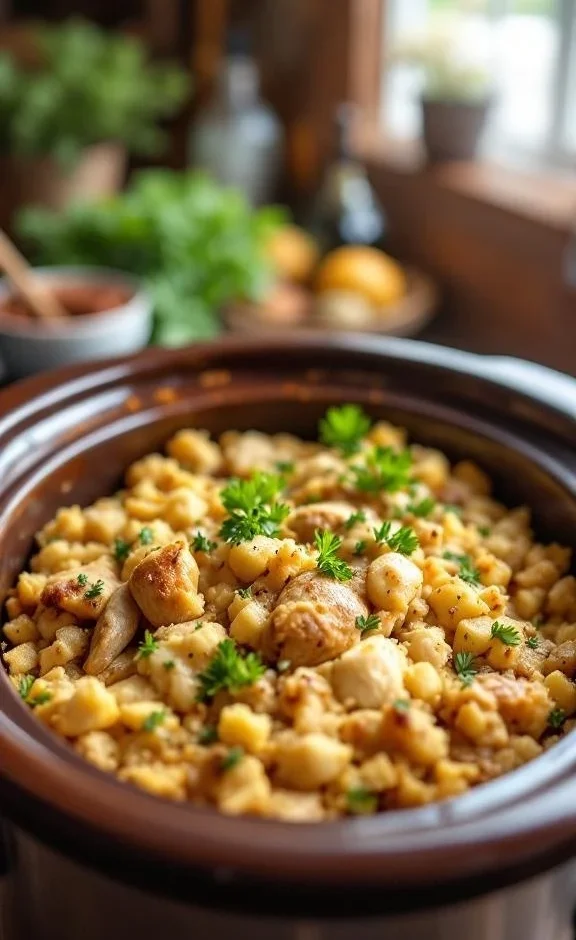
- Prepare the Slow Cooker
Begin by placing your slow cooker on a stable, heat resistant surface away from anything that could be damaged by several hours of steam and heat exposure. Kitchen counters work perfectly, while that antique wooden table your grandmother left you should probably stay far away from potential water damage.
Spray the interior of your slow cooker generously with nonstick cooking spray, paying special attention to the bottom and sides where ingredients are most likely to stick during the long cooking process. This simple step prevents hours of frustrated scrubbing later when dried stuffing refuses to budge from ceramic surfaces.
Alternatively, line your slow cooker with a disposable liner that makes cleanup as simple as lifting out the bag and tossing it in the trash. Some people view these as wasteful, while others consider them essential tools for maintaining sanity in busy households where nobody has energy for extensive dishwashing.
Check that your slow cooker is actually plugged in and functioning before you add ingredients and leave for work. This sounds obvious, but I've definitely returned home expecting dinner only to discover I never turned the thing on, resulting in an emergency pizza delivery and some serious self reflection about my life choices.
- Chicken Preparation and Seasoning
Remove chicken breasts from packaging and pat them dry with paper towels, as excess moisture prevents proper seasoning adhesion and can make the final dish watery. Examine each piece for any remaining fat or unpleasant bits that need trimming, though boneless skinless breasts rarely require much attention.
Arrange the chicken breasts in a single layer across the bottom of your prepared slow cooker, positioning them so they fit comfortably without overlapping too much. Some overlap is inevitable in standard sized slow cookers, but spreading them out as much as possible promotes even cooking throughout all pieces.
Sprinkle the garlic powder, onion powder, salt, pepper, thyme, and parsley evenly over the chicken, trying to coat all visible surfaces rather than creating concentrated piles of seasoning in random spots. The seasonings will redistribute during cooking, but starting with even coverage ensures better flavor distribution.
Use clean hands or a spoon to gently press the seasonings into the chicken surface, helping them adhere better rather than just sitting loosely on top where they might wash away when liquid is added. This extra thirty seconds improves the final flavor significantly.
- Mix the Stuffing
Grab your large mixing bowl and combine the entire box of stuffing mix with the chicken broth, stirring until all the dry bread cubes start absorbing liquid and softening. The mixture will look way too wet initially, but that's exactly what you want since the stuffing will continue absorbing moisture throughout the cooking process.
Add the can of cream of chicken soup to the stuffing mixture, stirring thoroughly to incorporate it completely rather than leaving weird cream blobs that will haunt your final dish. The soup adds richness and helps bind everything together while contributing that classic comfort food creaminess.
Dump in the frozen vegetables and stir them through the stuffing mixture, distributing them evenly so every serving gets a decent variety rather than some people getting all carrots while others end up with nothing but peas. Mixed vegetables are already cut to appropriate sizes, saving you from tedious chopping.
Taste the mixture and adjust seasoning if needed, remembering that flavors will concentrate during cooking but you can always add more salt at serving time. Better to start conservatively than create something so salty it requires three glasses of water per bite.
- Add Stuffing Mixture
Pour the stuffing mixture over the seasoned chicken in the slow cooker, spreading it evenly to cover all the meat rather than leaving some pieces exposed while others are buried under mountains of stuffing. Use a spoon or spatula to distribute everything as uniformly as possible.
Gently press the stuffing down slightly to ensure it makes contact with the liquid at the bottom, which helps it cook evenly throughout rather than having dry spots that never properly hydrate. Don't compact it too firmly, as the stuffing needs air pockets to achieve that fluffy texture.
Check that you have adequate liquid in the slow cooker by tilting it slightly to see if broth is visible around the edges. If everything looks bone dry, add another half cup of chicken broth to prevent burning and ensure proper moisture levels throughout cooking.
Place the lid securely on the slow cooker, ensuring it sits properly in the grooves rather than sitting askew, which would allow heat and moisture to escape while extending cooking time unnecessarily. A proper seal creates the steamy environment necessary for perfect results.
- Cook
Set your slow cooker to low for the most tender, flavorful results, as the gentle heat allows chicken to cook through completely while developing maximum flavor without drying out. Low settings work best when you're leaving for work and want dinner ready when you return home.
High heat settings cut cooking time roughly in half and work perfectly fine when you're home and available to monitor progress occasionally. Results will be nearly identical to low heat, though some people insist the texture is slightly different when you rush the process.
Resist every urge to lift the lid and check progress during the first few hours, as each peek releases accumulated heat and moisture while extending cooking time by 15 to 30 minutes. The temptation becomes real when amazing smells start wafting from the slow cooker around hour three.
During the final hour, you can lift the lid once to check if the chicken looks cooked through and the stuffing appears fluffy rather than soupy. Properly cooked chicken should have no pink remaining and should register 165°F on an instant read thermometer when checked in the thickest part.
- Serve
Carefully remove the lid when cooking time completes, tilting it away from yourself to prevent getting blasted with hot steam that could burn your face or arms. The steam release feels dramatic but it's just excess moisture evaporating after being trapped for hours.
Use two forks to shred the chicken directly in the slow cooker, pulling it apart into bite sized pieces that will mix throughout the stuffing. The meat should be so tender it practically falls apart without resistance, requiring minimal effort to achieve perfect shredded consistency.
Stir the shredded chicken through the stuffing mixture, incorporating everything together so each serving contains a good ratio of meat to stuffing rather than having them remain in separate layers. This mixing step transforms individual components into a cohesive, complete dish.
Taste the final result and adjust seasoning if necessary, adding more salt, pepper, or herbs according to your preferences and how the flavors developed during cooking. Every slow cooker cooks slightly differently, so final adjustments ensure your version tastes perfect.
Lean chicken breast provides high quality protein while keeping fat content relatively low compared to other comfort food options. The protein supports muscle maintenance and creates satiety that helps prevent snacking on less nutritious foods later in the evening.
Mixed vegetables contribute vitamins, minerals, and fiber that boost the nutritional value significantly while adding color and texture that make the dish more satisfying. The variety ensures you're getting different nutrients rather than relying on a single vegetable.
Whole grain stuffing mixes offer more fiber and nutrients than white bread versions, though honestly most of us just use whatever box is on sale. The difference isn't dramatic enough to stress about unless you're particularly focused on maximizing nutrition.
Sodium content requires consideration since both the stuffing mix and cream soup contribute significant salt to the final dish. Using low sodium versions of these ingredients helps manage overall sodium levels for people monitoring their intake.
- Calories:350 kcals
- Fat:10 grams
- Proteins:30 grams
- Carbohydrates:35 grams
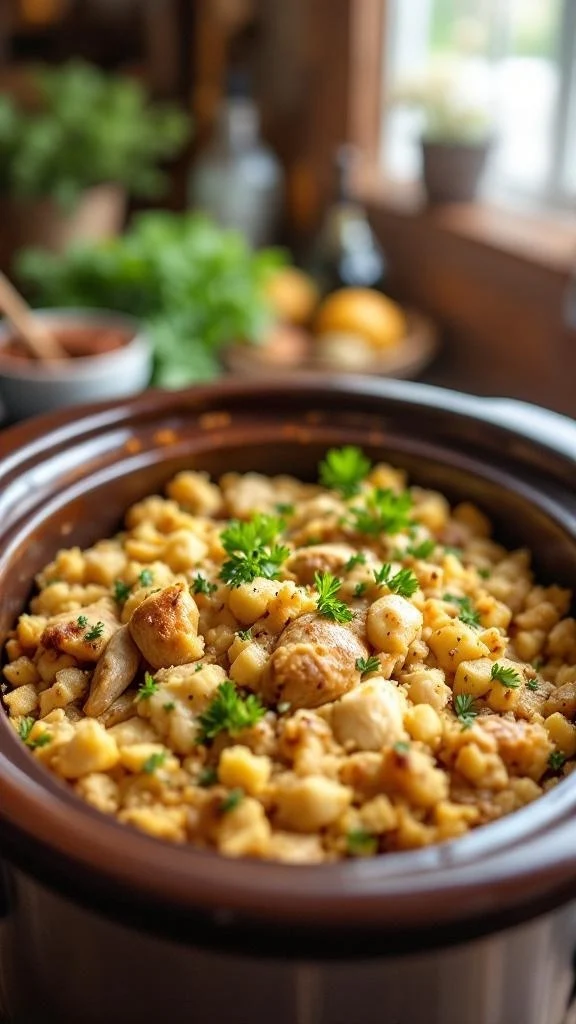
Chicken stuffing crock pot became my signature dish after a particularly chaotic Thursday when I realized at 4 PM that I had nothing planned for dinner, three hungry kids demanding food, and the energy level of a sloth on vacation. Picture me standing in front of my open refrigerator, staring at some chicken breasts and a box of stuffing mix like they held the secrets to the universe, desperately hoping inspiration would strike before the hangry monsters emerged.
The whole beautiful accident started because I was too exhausted to follow an actual recipe and just threw everything I could find into the slow cooker with a prayer and a generous pour of chicken broth. Six hours later, my house smelled like Thanksgiving had arrived three months early, and I had somehow created the most comforting, absurdly easy dinner that made my kids actually put down their phones and come to the table without being asked seventeen times.
My relationship with slow cookers has always been complicated, oscillating between worship and frustration depending on whether I remembered to plug the thing in. But this particular combination of chicken and stuffing felt like discovering fire for the first time, except way less dangerous and significantly more delicious. The chicken became so tender it practically shredded itself just from my looking at it, while the stuffing absorbed all those savory juices and turned into something that should probably be illegal in at least three states.
What makes this version special isn’t some fancy technique or exotic ingredient list that requires three trips to specialty stores. It’s the beautiful simplicity of watching basic ingredients transform into comfort food gold while you’re off doing literally anything else. The method I’ve perfected over countless iterations ensures the chicken stays moist, the stuffing gets fluffy but not mushy, and you look like a domestic wizard without breaking a sweat. Furthermore, this recipe has saved me from the dinner time panic spiral more times than I can count, becoming my go to solution whenever I need something foolproof that tastes like I actually tried.
Cultural Context & Recipe History
Stuffing holds sacred status in American comfort food culture, traditionally reserved for holiday tables where it soaked up turkey drippings while families gathered for once yearly reunions. The combination of bread, herbs, and savory liquid dates back centuries to when resourceful cooks discovered that stale bread could be transformed into something delicious rather than tossed to the chickens.
Slow cooker adaptations of classic dishes emerged during the 1970s when these countertop appliances revolutionized home cooking by allowing busy families to prepare dinner while at work. The “set it and forget it” mentality aligned perfectly with increasingly hectic American lifestyles where both parents often worked outside the home.
Combining chicken with stuffing in a single pot represents the ultimate evolution of practical home cooking, taking a holiday centerpiece and making it weeknight accessible. This democratization of special occasion food reflects how American cuisine constantly adapts traditional recipes to fit modern life constraints.
Regional variations exist throughout the country, with Southern cooks preferring cornbread based stuffing while New Englanders stick to traditional herb seasoned bread cubes. Midwest families often add wild rice or sausage, while West Coast versions might incorporate dried fruits or nuts for California flair.
My research into family recipe boxes and church cookbooks revealed that slow cooker chicken and stuffing combinations have been quietly circulating for decades, passed between neighbors and coworkers as the ultimate potluck secret weapon. These recipes survive because they work reliably while requiring minimal skill or supervision, making them perfect for cooks at any experience level.
Equipment & Tools
A reliable slow cooker with at least 6 quart capacity becomes absolutely essential for fitting all the ingredients comfortably without overflow disasters. Oval shapes work better than round for accommodating chicken breasts laid flat, though both will technically get the job done if you’re willing to get creative with ingredient arrangement.
Sharp kitchen shears or a good knife makes portioning chicken breasts easier if they’re enormous and won’t fit nicely in your slow cooker. Uniform sizing helps everything cook evenly, preventing that annoying situation where some pieces are perfect while others remain stubbornly undercooked.
Large mixing bowl allows you to combine the stuffing mixture before adding it to the slow cooker, ensuring even distribution of ingredients without creating a lumpy mess. This step takes thirty seconds but makes a noticeable difference in the final consistency.
Two sturdy forks become your shredding tools once the chicken finishes cooking, allowing you to pull the meat apart without burning your fingers or making a mess. Metal forks work better than plastic, which can melt if you accidentally touch them to the hot slow cooker sides.
Serving spoon with a deep bowl makes portioning much easier since this dish has both solid and liquid components that need to stay together on the plate. Nobody wants a sad pile of stuffing with all the good stuff left behind in the pot.
Slow cooker liners save you from the worst cleanup job imaginable and cost about thirty cents per use, making them absolutely worth the investment unless you genuinely enjoy scrubbing baked on stuffing remnants for twenty minutes.
Understanding Chicken Cooking Times
Chicken breast thickness significantly impacts cooking time, with thinner pieces finishing faster while thicker ones need additional time to cook through completely. Pounding breasts to uniform thickness before cooking promotes even results, though I usually can’t be bothered with that extra step.
Frozen chicken extends cooking time by 1 to 2 hours and may create excess liquid as it thaws, potentially making your stuffing too wet. Thawing in the refrigerator overnight produces better results but requires planning ahead that doesn’t always happen in real life.
Bone in chicken takes longer to cook than boneless varieties while contributing more flavor to the dish. However, dealing with bones during serving becomes annoying enough that I stick with boneless breasts for this particular recipe.
Perfecting the Seasoning Layers
Building flavor through multiple seasoning applications creates depth that single step seasoning cannot achieve. Seasoning the chicken directly before adding other ingredients ensures the meat itself tastes good rather than relying entirely on the stuffing for flavor.
The stuffing mix typically contains its own seasoning blend, so additional herbs and spices should complement rather than compete with those existing flavors. Tasting the stuffing mixture before cooking helps you gauge whether extra seasonings are necessary.
Some people love adding extra butter to the stuffing mixture for richness, while others prefer keeping things lighter by relying on the cream soup for fat content. Neither approach is wrong, and experimentation helps you discover your perfect version.
Recipe Variations & Adaptations
Turkey breast works beautifully as a substitute for chicken, creating a more holiday appropriate version that tastes like Thanksgiving dinner without the stress of roasting a whole bird. Cooking times remain roughly the same since turkey breast has similar density to chicken.
Different stuffing flavors create entirely new dishes while maintaining the same basic technique. Cornbread stuffing adds Southern flair, while herb seasoned varieties lean more traditional and cranberry versions bring sweetness that some people love and others find weird.
Vegetable combinations can be customized based on personal preferences or what’s lurking in your freezer. Bell peppers, mushrooms, zucchini, or spinach all work well when added during the final hour to prevent them from turning to complete mush.
Cheese additions transform this from simple comfort food into something more indulgent and kid friendly. Stirring in shredded cheddar during the final fifteen minutes creates gooey richness that makes picky eaters suddenly interested in vegetables.
Troubleshooting Common Problems
Dry chicken usually results from cooking too long or starting with extremely lean breasts that don’t have enough fat to stay moist during extended cooking. Using chicken thighs instead of breasts solves this problem, as dark meat is nearly impossible to dry out in a slow cooker.
Mushy stuffing indicates too much liquid or cooking at too high a temperature, causing the bread cubes to break down completely rather than maintaining their structure. Reducing liquid by half a cup or cooking on low instead of high prevents this texture issue.
Bland flavors typically mean insufficient seasoning at the beginning, since slow cooking doesn’t concentrate flavors the way other methods do. Being generous with seasonings and tasting the stuffing mixture before cooking helps ensure the final dish has enough flavor.
Watery results can occur when frozen vegetables release more moisture than expected or when you used frozen chicken that released excess liquid during thawing. Removing the lid during the final 30 minutes allows excess moisture to evaporate.
Storage & Meal Prep Strategy
Proper storage maintains quality for several days while providing convenient lunches or quick dinners throughout the week. Cool the dish completely before transferring to airtight containers, where it will keep in the refrigerator for up to 4 days.
Portioning into individual servings before refrigerating makes grab and go meals incredibly convenient for busy workdays when you need something quick but don’t want to resort to sad desk salads or overpriced takeout.
This dish freezes reasonably well for up to 2 months, though the stuffing texture changes slightly after thawing. Freezing in individual portions allows you to thaw only what you need rather than committing to eating the entire batch.
Reheating works best in the microwave with a splash of additional chicken broth to restore moisture that evaporates during storage. Covered reheating prevents everything from drying out while ensuring even heating throughout.
Advanced Finishing Techniques
Crisping the top under the broiler for 2 to 3 minutes after slow cooking creates textural contrast that elevates the dish from good to great. This optional step adds visual appeal while providing that slightly crispy stuffing top that many people crave.
Fresh herb garnishes like parsley, chives, or thyme add color and brightness that make the presentation more appealing while contributing fresh flavors that complement the slow cooked components. Even just a sprinkle transforms the visual impact significantly.
Making gravy from the cooking liquid takes this dish into fancy territory without much extra effort. Simply strain the liquid, thicken it with a cornstarch slurry, and you’ve got restaurant quality sauce to drizzle over everything.
Serving Suggestions & Pairings
Simple green salads provide fresh, crisp contrast to the rich, hearty main dish while adding vegetables and fiber that balance the meal nutritionally. A basic vinaigrette cuts through the richness without competing with the complex flavors.
Cranberry sauce adds sweet and tart elements that complement the savory stuffing perfectly, creating a complete holiday meal vibe even when it’s just Tuesday in March and nobody has a day off work.
Dinner rolls or biscuits soak up any extra liquid while providing additional carbs for those who think meals require bread even when the main dish already contains bread. I’m not judging, I’m in this camp too.
Wine pairings should complement rather than overpower the subtle flavors, with light white wines like Pinot Grigio or Chardonnay providing refreshment without competing. Red wine drinkers might prefer lighter varieties like Pinot Noir that won’t overwhelm the dish.
Family & Entertainment Adaptations
Kid friendly modifications focus on familiar flavors while maintaining visual appeal that makes children actually willing to try something new. Mixing in their favorite cheese or serving with familiar sides helps introduce the dish without overwhelming picky eaters.
Potluck presentations work beautifully since this dish travels well and stays warm for extended periods in the slow cooker. Simply unplug it, wrap a towel around the base, and transport it to your gathering where you’ll be everyone’s favorite guest.
Holiday meal preparation benefits from this recipe as a side dish that frees up valuable oven space while still delivering traditional flavors. Making it the day before and reheating allows you to focus on other dishes on the actual holiday.
Budget stretching strategies include using whatever vegetables are cheapest or on sale, substituting store brand stuffing mix, and buying chicken when it’s marked down. The recipe is forgiving enough that these swaps don’t significantly impact the final quality.
Seasonal & Occasion Variations
Fall and winter versions might include butternut squash, sweet potatoes, or cranberries that create harvest flavors perfect for cooler weather comfort food cravings. These additions make the dish feel more seasonal without requiring entirely different techniques.
Spring adaptations could incorporate fresh asparagus, peas, or herbs that lighten the dish while maintaining its comforting qualities. Adding lemon zest at serving time provides brightness that feels appropriate for warmer weather.
Summer versions seem less common since slow cookers heat up kitchens, but adding fresh tomatoes and basil creates Mediterranean influenced results that work for any season when you’re craving comfort food regardless of the thermometer reading.
Detailed FAQ Section
Q: Can I use chicken thighs instead of breasts for this recipe? Absolutely, and many people prefer thighs because they stay juicier during the long cooking time. Use about 2 pounds of boneless skinless thighs, keeping cooking times the same. The dark meat adds more flavor and is practically impossible to dry out even if you accidentally cook it too long.
Q: What if I don’t have cream of chicken soup? You can substitute cream of mushroom or cream of celery soup, or make a quick substitute by mixing 1 cup of milk with 3 tablespoons of flour and 2 tablespoons of melted butter. The flavor will be slightly different but the dish will still work fine.
Q: Can I make this recipe without the slow cooker? Yes! Bake it in a covered casserole dish at 350°F for about 45 minutes to an hour until the chicken reaches 165°F internally. The texture will be slightly different but still delicious, though you lose the convenience factor that makes this recipe so appealing.
Q: How do I prevent the stuffing from getting too dry on top? Make sure your slow cooker lid fits properly to trap moisture, and avoid lifting it during cooking. If the top still seems dry, gently stir everything halfway through cooking or add an extra 1/4 cup of broth before starting.
Q: Can I add raw chicken directly from frozen? Technically yes, but it’s not recommended. Frozen chicken adds 1 to 2 hours to cooking time and releases excess water that can make your stuffing soggy. Thawing overnight in the refrigerator produces much better results and is worth the minimal planning required.
Q: What vegetables work best in this recipe? Carrots, peas, green beans, and corn are classics, but really any frozen mixed vegetables work fine. Avoid delicate vegetables like spinach or zucchini unless you add them during the final hour, as they turn to mush during the long cooking time.
Q: Why is my finished dish watery instead of creamy? Too much liquid is the usual culprit. Next time, reduce the broth by 1/4 to 1/2 cup. You can also remove the lid during the final 30 minutes to let excess moisture evaporate. Frozen vegetables release water, so using fresh might help too.
Q: Can I prep this the night before and cook it the next day? You can prep ingredients separately and refrigerate them overnight, then assemble everything in the morning before turning on the slow cooker. Don’t assemble it completely the night before, as the stuffing will get too soggy sitting in liquid overnight.
Q: How do I know when the chicken is fully cooked? The chicken should reach 165°F internally when measured with an instant read thermometer. It should also be white throughout with no pink remaining, and it should shred easily with a fork without any tough or rubbery texture.
Q: Can I double this recipe for a larger crowd? Doubling works if you have a large enough slow cooker (at least 8 quarts). Keep the cooking time the same but check for doneness slightly earlier, as larger quantities sometimes cook faster. You might need two slow cookers for true doubling in standard sized appliances.
Final Thoughts & Encouragement
Creating perfect chicken stuffing crock pot meals represents the ultimate victory of convenience over complexity, proving that delicious comfort food doesn’t require culinary school training or hours of active kitchen time. The satisfaction of coming home to a house that smells like Thanksgiving while you’ve been doing absolutely anything else never gets old.
Don’t worry about following every instruction perfectly or achieving restaurant presentation, since this recipe forgives mistakes while still producing results that make everyone at the table happy. The whole point is making your life easier while feeding people food they actually want to eat.
The techniques you’ll master here translate to countless other slow cooker applications, building your confidence with one pot meals that simplify weeknight cooking. Understanding how ingredients interact during slow cooking opens up entire categories of convenient meals that fit busy schedules.
This recipe creates enough food to feed your family while providing leftovers that actually taste good reheated, making your meal prep efforts pay dividends throughout the week. The versatility means you can customize it endlessly based on what’s in your fridge and who’s eating.
I hope this guide gives you everything needed to create chicken stuffing that makes your slow cooker earn its counter space while delivering results that bring people together around the dinner table, even when everyone’s too tired to cook properly but still wants something better than takeout for the third time this week.