The Ultimate Guide to Green Salads and Dressings That Never Feel Boring
- May 17, 2026
- 19 Min Read
Salad has a reputation problem. Somewhere along the way, it became the thing you order when you are “being good,” the side dish nobody asked for, the meal you eat when you have given up on dinner being enjoyable. That reputation is completely undeserved and entirely the fault of bad dressing, wrong greens, and zero attention to texture.
A great green salad is not sad. It is one of the fastest, most flexible, and most genuinely satisfying things you can put on a table when it is built correctly. The secret is not some exotic ingredient or some technique you need culinary school to understand.
It is understood that salad has three jobs: the greens carry the texture, the toppings carry the substance, and the dressing ties everything together into something that tastes like an intentional meal rather than an afterthought. Get those three things right, and green salad recipes go from obligation to the thing people ask you to bring every single time.
This collection covers twenty green salads and dressings across every category you actually need: hearty main dish salads loaded with protein, crisp side salads that work alongside anything, healthy salad dressings you make in five minutes and use all week, and a few recipes that blur the line between salad and everything else in the best possible way. Every recipe is linked and real. No filler. No “just toss greens with your favorite dressing.” Actual recipes with actual instructions for people who want actual results.
What Makes a Green Salad Actually Work
Here is the deal with most disappointing salads: they are underdressed, under-seasoned, and built on greens that were not properly dried after washing. Those three problems cause ninety percent of the “I don’t really like salad” situations that have been running since the 1980s.
Underdressing is the most common issue. People are afraid of calories in dressing and end up with a bowl of leaves that tastes like nothing. A properly dressed salad coats every leaf lightly and uniformly. You should not see dressing pooling in the bottom of the bowl. You should not see dry leaves sitting on top of the pile either. The ratio is roughly one tablespoon of dressing per two cups of greens as a starting point, adjusted by how thick the dressing is and how hearty the leaves are.
Unseasoned greens are the second problem. Salads get salt only from the dressing in most home kitchens, which means the salt has to reach every leaf through the dressing coating. Add a small pinch of salt directly to the greens before dressing them. This seasons the greens themselves, not just the liquid surrounding them, and produces a noticeably more complete flavor in every bite.
Wet greens repel oil-based dressings. This is physics. Oil and water do not mix, and wet salad leaves send vinaigrette straight to the bottom of the bowl. Dry your greens after washing. A salad spinner does this fast and well. A clean kitchen towel works too. Either way, dry greens are the non-negotiable step that most people skip and then wonder why their dressing ended up at the bottom.
Featured Recipe: Cobb Salad
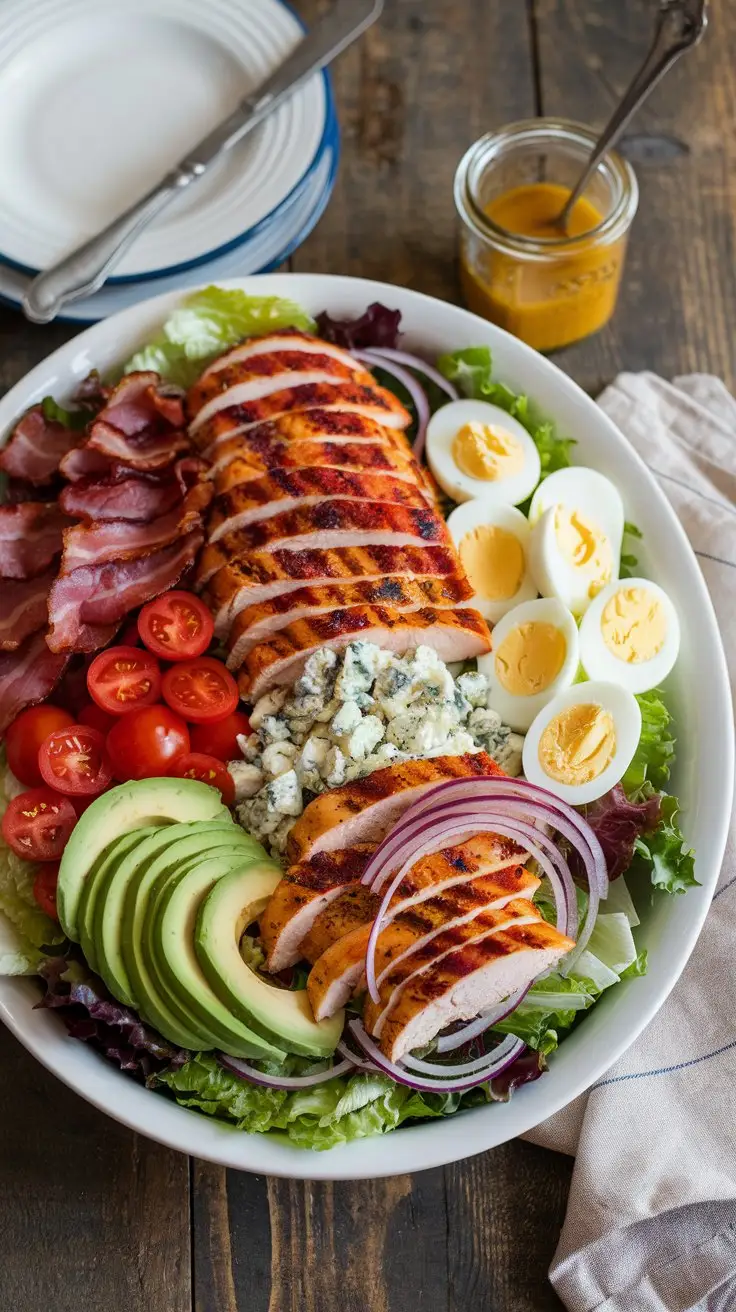
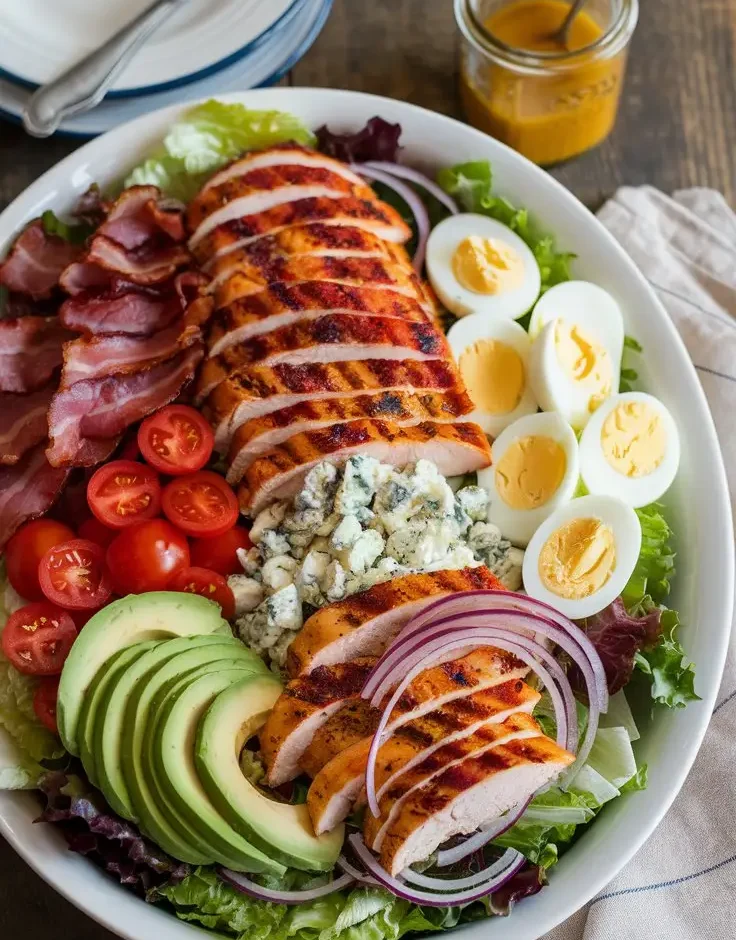
The Cobb Salad is the featured recipe because it makes the strongest possible case for green salad as a real meal. This is not a side dish. It is a full plate: chopped romaine, chicken, hard-boiled egg, bacon, avocado, tomato, and blue cheese, arranged in rows over the greens and dressed with whatever vinaigrette you have on hand. The row arrangement is not just visual. It means every forkful gets to choose its own combination of toppings, which makes the salad more interesting to eat from the first bite to the last. Easy difficulty, any occasion, and the kind of salad that makes people who say they do not like salad go back for seconds.
How to Build a Homemade Salad Dressing That Actually Emulsifies
This is the technique section that changes everything about homemade dressings, because most people make one of two mistakes: they either use too much acid, which produces a sharp, mouth-puckering result, or they do not emulsify the oil and acid properly, which gives them a dressing that separates immediately and coats the greens unevenly.
The ratio for a basic vinaigrette is three parts oil to one part acid. Three tablespoons of olive oil to one tablespoon of vinegar or lemon juice. That is the foundation of every healthy salad dressing in this collection and most dressings you will ever need. A lemon vinaigrette uses fresh lemon juice as the acid. A balsamic vinaigrette uses balsamic vinegar. A red wine vinaigrette uses red wine vinegar. The ratio stays the same. The flavor character changes completely.
Emulsification is what keeps the oil and acid from immediately separating into two layers. The easiest emulsifier in your pantry is Dijon mustard, which is why it shows up in the Lemon Dijon Vinaigrette and the Honey Mustard Vinaigrette Recipe. Half a teaspoon of Dijon whisked into the acid before the oil is added creates a temporary emulsion that holds the dressing together long enough to coat the greens properly before it breaks. Garlic pressed into the acid works similarly. Both are what give restaurant vinaigrettes that smooth, coating quality that home versions often lack.
For a creamy dressing, the emulsifier is the base itself. The Caesar Dressing Recipe uses egg yolk and anchovy paste as its binding agents, which is why a proper Caesar dressing has that thick, clinging texture that grocery store versions approximate but never quite nail. The Homemade Ranch Dressing Recipe uses buttermilk and mayonnaise for the same reason. In both cases, the fat from the base binds with the other ingredients to create a stable, coating emulsion that stays put on the greens rather than sliding off.
Acid type matters beyond just flavor. White wine vinegar produces the lightest, most delicate dressings. Red wine vinegar adds a little more sharpness and a slight fruitiness. Apple cider vinegar brings a mild sweetness and works particularly well in fall salads, which is why the Apple Cider Vinaigrette pairs so well with bitter greens and roasted vegetables. Balsamic vinegar is sweeter and thicker than most vinegars and produces a dressing that clings rather than runs, which makes it a solid choice for a balsamic vinaigrette over sturdy greens like arugula or romaine.
Season the dressing before it goes on the salad. A dressing that tastes slightly too sharp, slightly too sweet, or slightly too salty in the jar will taste just right on the greens because the greens dilute everything slightly. Taste it from a spoon and adjust, then taste it again on a leaf before you commit to dressing the whole bowl.
Vinaigrette vs Creamy Dressing: Which One to Reach For
Vinaigrette is the right choice for mixed greens salads, lighter greens like arugula and spring mix, and any salad where you want the ingredients to shine rather than be coated. Creamy dressings are the right choice for sturdy greens like romaine, iceberg, and kale, and for salads where richness is the point rather than freshness.
That is the direct answer. Here is the longer version that actually helps you make better decisions.
A lemon vinaigrette or a balsamic vinaigrette over a mixed greens salad with delicate toppings lets you taste everything in the bowl. The dressing is present but not dominant. The greens hold their texture. The toppings do not get lost under a thick coating. This is why most chef-style salads use vinaigrette: it enhances without overwhelming.
A creamy dressing over romaine produces a completely different eating experience. The dressing clings to the leaves, coats them uniformly, and adds richness that makes the salad feel more like a meal and less like a garnish. This is why Caesar salad uses Caesar dressing and not vinaigrette. The romaine can handle the weight of the dressing and the flavors are complementary rather than competing.
The practical recommendation: build your dressing repertoire around two or three vinaigrettes you make from scratch and keep one creamy dressing in the refrigerator at all times. The Vinaigrette Salad Dressing Recipe is the master version that covers most situations. The Homemade Ranch Dressing Recipe is the creamy anchor because ranch is the most versatile dipping and dressing sauce in American cooking and the homemade version is genuinely better than anything in a bottle.
The Ingredients and Tools That Make Green Salads and Dressings Work
Best salad greens for everyday use are the ones that can hold dressing for at least ten minutes without wilting. Romaine is the most durable and the best choice for any salad that will sit for a while before being eaten. Arugula has a peppery bite that adds personality to a mixed greens salad. Baby spinach is mild, tender, and works in both warm and cold applications. Spring mix is the catch-all option for a light, varied base when you are not building around a specific green.
Greens to approach with more care: butter lettuce wilts fast and needs to be dressed right before serving. Baby kale is genuinely hearty but benefits from a brief massage with a little olive oil and salt before dressing to soften its slightly tough texture. Iceberg is crisp and mild but has almost no nutritional value and very little flavor, which means your dressing and toppings have to do all the work.
Extra-virgin olive oil is the base for almost every vinaigrette in this collection and the quality matters more here than in cooking. When olive oil is heated, most of its flavor compounds cook off. In a raw dressing, those compounds are the entire flavor profile.
A grassy, peppery extra-virgin olive oil makes a lemon vinaigrette taste like something. A bland, flavorless oil makes the same dressing taste like acid in liquid fat. You do not need to spend a lot of money. You need to taste the oil before you buy it and make sure it actually tastes like something good.
A jar with a tight-fitting lid is the best tool for making vinaigrette at home. Add all the ingredients, shake for thirty seconds, and you have an emulsified dressing without a whisk, a blender, or any cleanup beyond rinsing the jar. The shaking action creates enough mechanical force to emulsify the oil and acid temporarily, which is all you need for a dressing you are using the same day.
If you want a dressing that holds its emulsion for a week in the refrigerator, use an immersion blender. The smaller droplet size produced by the blender creates a more stable emulsion that does not separate as quickly.
Freshly squeezed lemon juice versus bottled lemon juice is not a close call for a lemon vinaigrette. Bottled juice has been pasteurized and preservatives have been added, which changes the flavor from bright and fresh to slightly flat and slightly chemical. For a dressing where lemon is the primary flavor driver, fresh is the only version that produces what you are going for.
What Green Salads to Make by Season, Occasion, and Crowd
Spring and summer are when the lighter, produce-forward salads take over. The Watermelon Salad With Cucumber, Feta And Lemon is the summer showstopper: sweet, salty, acidic, and cold, which is exactly what a hot day calls for. The Corn Salad Recipe follows the same seasonal logic and works best with fresh corn when it is at peak sweetness in July and August. The Asian Cucumber Salad and the Cucumber Soy Sauce Salad are both fast no-cook options for warm weather that pair well with grilled anything. All four of these are easy green salad options that require almost no active cooking and can be assembled in under fifteen minutes.
Fall and winter shift toward heartier greens and richer dressings. A mixed greens salad with apple, candied pecans, and the Apple Cider Vinaigrette is a fall combination that works on every table from a weeknight dinner to a Thanksgiving spread. The Blue Cheese Dressing over a wedge salad is pure cold-weather comfort food and the kind of thing that makes a simple dinner feel like it went up a level.
For potlucks and gatherings where the salad needs to travel and hold: the Spaghetti Pasta Salad Recipe and the Ambrosia Salad are both make-ahead options that improve after sitting. The pasta salad benefits from at least an hour of refrigeration for the Italian dressing to soak into the pasta. The ambrosia is a classic American potluck contribution that does not pretend to be anything other than what it is: sweet, creamy, and crowd-approved.
For main dish salads that make dinner a complete meal without any sides: the Cobb Salad and the Chicken Salad are the strongest options in this collection. Both have enough protein and fat to serve as a full dinner rather than a side. Both work year-round. Both are easy to scale for different group sizes without adding any complexity.
For pairing green salads with the broader CrispyGlaze menu, the Chicken Dinner Ideas collection covers every chicken main that works alongside a green salad, from the honey garlic chicken over a lemon vinaigrette salad to the Korean BBQ chicken beside an Asian cucumber preparation. And for soup-and-salad combinations that function as a complete light meal, the Soup and Chowder Recipes collection has the other half of that equation covered.
When Salad Goes Wrong: Four Problems With Fixes
The Dressing Separated Before It Hit the Table
Oil-based dressings separate. That is not a flaw in the recipe. It is the nature of oil and water. The fix is not to make a different dressing. It is to shake or whisk the dressing immediately before using it, every single time. A separated dressing in a jar looks like it failed. Twenty seconds of shaking and it is back. If you want a dressing that holds its emulsion in the refrigerator without shaking, add half a teaspoon of Dijon mustard or a small clove of garlic blended into the acid before the oil. Both act as emulsifiers and extend the time before separation. The Red Wine Vinaigrette and the Homemade Italian Dressing both use this approach.
The Salad Went Soggy Within Ten Minutes of Dressing
Soggy salad is almost always wet greens plus too much dressing applied too early. Moisture on the leaves prevents the dressing from coating them properly and then continues releasing into the dressing, diluting it and wilting the greens in the process.
The fix has two parts. First, dry the greens completely after washing, either in a salad spinner or on a clean towel. Second, dress the salad right before serving rather than in advance, and use less dressing than you think you need. You can always add more. You cannot un-dress a salad. For a meal prep situation where the salad needs to hold for a day, store the dressing separately and dress individual portions at serving time.
The Homemade Caesar Dressing Tasted Fishy Instead of Savory
Too much anchovy. This is the calibration mistake people make the first time they make Caesar dressing from scratch. Anchovy in Caesar dressing should be a background note, not a front-row presence. It should register as savory depth rather than as fish.
One to two anchovy fillets per batch of dressing is the right amount, mashed into a paste with the back of a fork before mixing with the other ingredients. The paste distributes more evenly than a chopped fillet and the intensity mellows as it integrates with the lemon and garlic. If you have already made the dressing and it is too fishy, add more lemon juice and Parmesan, which both balance the anchovy without requiring you to start over.
The Salad Greens Wilted Overnight in the Refrigerator
Lettuce and most salad greens do not store well once they have been torn or cut, especially in a container that traps moisture and ethylene gas. If you are prepping greens ahead of time, keep them whole or in large pieces and store them dry in a container lined with a paper towel, which absorbs the excess moisture that accelerates wilting.
Torn or cut greens should be used within a day. Dressing speeds up the wilting process by drawing moisture out of the leaves through osmosis, which is why pre-dressed salads lose their texture within an hour. For the Chicken Salad, keep the chicken mixture separate from the greens until serving and the whole preparation holds for up to three days in the refrigerator without any texture loss.
FAQ
What are the best salad greens for a mixed greens salad?
Romaine, arugula, baby spinach, and spring mix are the four workhorses for a mixed greens salad in home cooking. Romaine gives you crunch and durability. Arugula gives you peppery bite. Baby spinach adds iron and a mild, slightly earthy note. Spring mix provides variety without requiring you to buy and store four separate bunches of greens.
For a salad that will hold for more than thirty minutes before being eaten, use romaine or a romaine-heavy mix. For a salad dressed and served immediately, any of the four work well. The best salad greens are the freshest ones available, not a specific variety, so buying what looks crisp and bright at the store is always the right call.
How do you make a good homemade balsamic vinaigrette?
A balsamic vinaigrette uses the same three-to-one oil-to-acid ratio as any other vinaigrette, with balsamic vinegar as the acid. Combine one tablespoon of balsamic vinegar with half a teaspoon of Dijon mustard, a small pinch of salt, and one clove of garlic minced or pressed. Whisk in three tablespoons of extra-virgin olive oil until emulsified. Taste and adjust.
The quality of the balsamic matters here more than it does in cooked applications: a thick, aged balsamic brings a natural sweetness and complexity that a thin, inexpensive version does not have. The Vinaigrette Salad Dressing Recipe covers the master technique that applies to every vinaigrette variation including balsamic.
What is a lemon vinaigrette and when should you use it?
A lemon vinaigrette replaces the vinegar in a standard vinaigrette with fresh lemon juice. The result is a brighter, lighter dressing with a citrus note rather than the fermented depth that vinegar provides. It is the right choice for delicate greens, seafood salads, grain bowls, and any preparation where you want freshness rather than richness.
The Lemon Dijon Vinaigrette uses Dijon mustard as the emulsifier, which adds a slight sharpness that rounds out the lemon without competing with it. According to Serious Eats{target=_blank}, fresh lemon juice produces a significantly brighter dressing than bottled because the volatile aromatic compounds responsible for lemon’s fresh quality degrade rapidly after juicing and are largely absent in pasteurized bottled versions.
Can you make salad dressings ahead of time?
Most dressings keep well in the refrigerator for at least a week in a sealed jar. Vinaigrette-style dressings like the Apple Cider Vinaigrette and the Red Wine Vinaigrette will separate over time but come back together after shaking. Creamy dressings like the Homemade Ranch Dressing Recipe and the Blue Cheese Dressing hold their texture well in the refrigerator for up to a week. Per FDA food safety guidelines, dressings containing fresh eggs or dairy should be kept refrigerated and used within seven days. Making dressings on Sunday and using them through the week is one of the most effective ways to actually eat more salad at home.
What is the easiest green salad recipe for a beginner?
The Watermelon Salad With Cucumber, Feta And Lemon requires no cooking, no special equipment, and no technique beyond cutting and assembling. The Corn Salad Recipe is equally approachable. For a salad with a homemade dressing as part of the recipe, the Honey Mustard Vinaigrette Recipe is the most forgiving because honey adds natural sweetness that balances any small errors in the acid ratio. Easy green salad recipes at their best are just a matter of assembling good ingredients and dressing them well, which is a skill that takes one or two attempts to lock in and then runs on autopilot.
How do you keep a salad from getting soggy when making it ahead?
Store all components separately and combine them at serving time. Greens in one container lined with paper towel. Toppings in a second container. Dressing in a jar. This setup holds for up to a day in the refrigerator without any quality loss in the greens or the dressing. For salads that include croutons or any crispy element, add those right before serving regardless of how far ahead everything else was prepped. Moisture is the enemy of crunch, and croutons that have been sitting on dressed greens for thirty minutes become something soft and sad that bears no resemblance to what they were at the start.
All Green Salads and Dressings Recipes on CrispyGlaze
Every recipe here is tested, real, and linked directly. Find what fits your occasion and go.
- Cobb Salad — loaded main dish, protein-forward
- Chicken Salad — make ahead, lunch or dinner
- Watermelon Salad With Cucumber, Feta And Lemon — summer staple, no cook
- Corn Salad Recipe — summer seasonal, easy assembly
- Asian Noodle Salad — 10 min, no-cook, crowd friendly
- Asian Cucumber Salad — quick side, bold sesame dressing
- Cucumber Soy Sauce Salad — 5 min, pantry staple dressing
- Ambrosia Salad — classic potluck, make ahead
- Spaghetti Pasta Salad Recipe — 10 min, feeds a crowd
- Vinaigrette Salad Dressing Recipe — master recipe, all-purpose
- Lemon Dijon Vinaigrette — lemon vinaigrette, French style
- Apple Cider Vinaigrette — fall forward, slightly sweet
- Red Wine Vinaigrette — bold, versatile, keeps one week
- Honey Mustard Vinaigrette Recipe — beginner friendly, balanced
- Homemade Italian Dressing — herby, pantry ingredients
- Avocado Lime Dressing — creamy, dairy-free option
- Blue Cheese Dressing — bold and creamy, wedge salad classic
- Thousand Island Dressing Recipe — retro classic, burger and salad
- Caesar Dressing Recipe — from scratch, better than bottled
- Homemade Ranch Dressing Recipe — buttermilk base, refrigerates all week
Here is the one thing worth carrying out of this page: a good homemade dressing in the refrigerator is the difference between eating salad regularly and eating salad occasionally. If you make a jar of the Vinaigrette Salad Dressing Recipe on Sunday, you will use it on a salad Monday, on roasted vegetables Tuesday, and on whatever needs brightening up by Thursday. The dressing unlocks the habit. Start there and the green salads and dressings collection takes care of the rest.